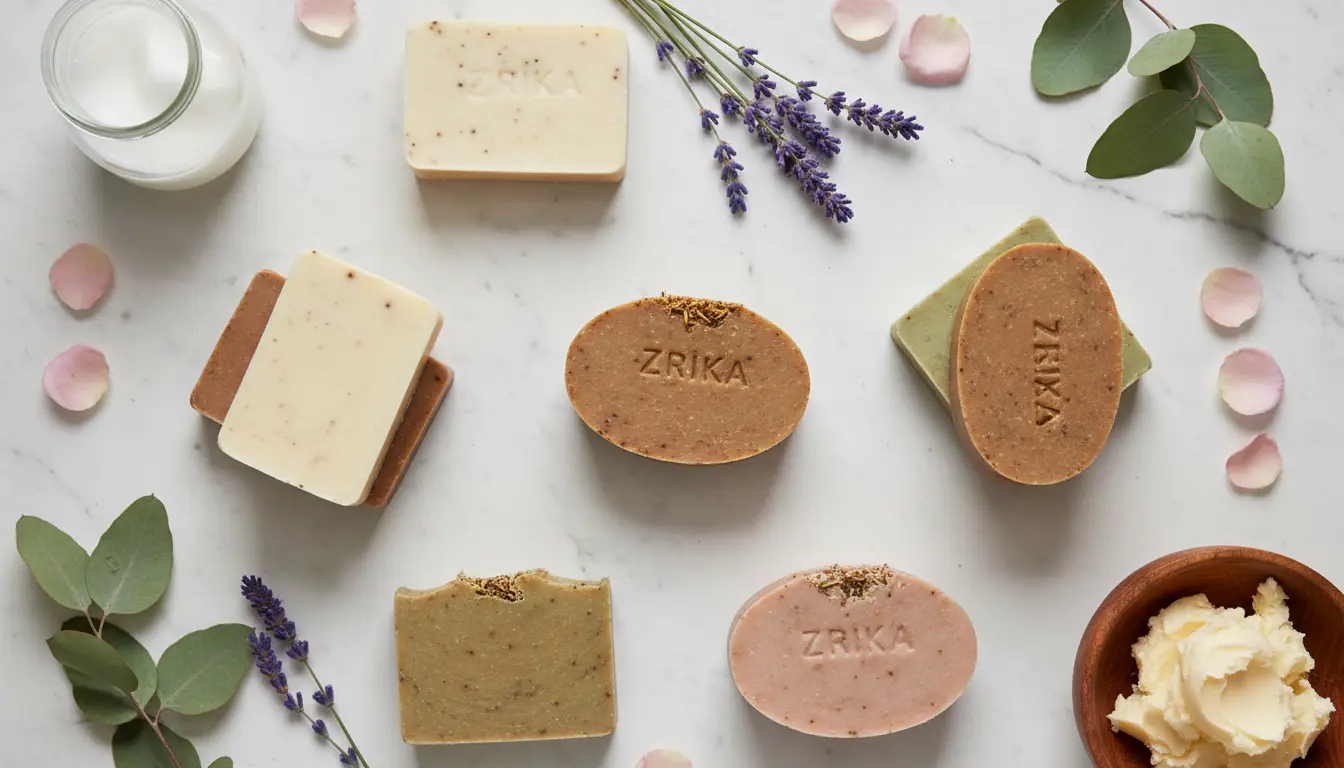
Zrika Bodycare | Natural Skincare Insights
Last month, a dermatologist sent us three patients in one week. All three had the same problem: irritated, dry, inflamed skin. All three were using the same popular “moisturizing” drugstore soap.
“Can you tell me what’s actually in this?” one patient asked, handing over the bar.
We read the ingredients. Sodium lauryl sulfate. Synthetic fragrance. Tetrasodium EDTA. Propylene glycol. Triclosan. By ingredient six, the problem was obvious.
She wasn’t cleansing her skin. She was chemically stripping it twice daily.
This happens more than most people realize. According to dermatological studies, approximately 60% of people using commercial soap bars experience some degree of barrier disruption—dryness, irritation, or sensitivity—that they attribute to “having sensitive skin” rather than using harsh products.
Here’s what we’ve learned about why luxury natural soaps aren’t just prettier or more expensive—they’re fundamentally different in how they interact with your skin.
The Problem: Most “Soap” Isn’t Actually Soap
Pick up that bar in your shower. Look at the label. Does it say “beauty bar,” “cleansing bar,” or “body bar” instead of “soap”?
That’s a legal distinction. It’s not soap—it’s a synthetic detergent.
Real soap is made through saponification: mixing fats/oils with an alkali (usually lye). The chemical reaction creates soap plus glycerin—a natural humectant that attracts moisture to your skin.
Commercial manufacturers extract this glycerin and sell it separately to lotion companies. Then they sell you both: a bar that dries you out, and lotion to fix it. Brilliant business model. Terrible for your skin.
Luxury natural soaps keep the glycerin in. That’s not marketing—it’s basic chemistry. And it’s the first of nine reasons these soaps work differently.
9 Reasons Natural Soaps Actually Make a Difference
1. Your Skin Barrier Finally Gets Support (Not Destruction)
Commercial soaps have pH levels around 9-11 (highly alkaline). Your skin’s natural pH? Around 4.5-5.5 (slightly acidic).
This pH difference isn’t trivial. Your skin’s “acid mantle” at pH 4.5-5.5 is crucial for:
- Keeping harmful bacteria out
- Supporting beneficial bacteria
- Maintaining barrier function
- Preventing sensitivity
Handcrafted organic soaps made through cold-process methods typically have pH 8-9.5—still alkaline but closer to your skin’s natural state. Plus, they contain buffering compounds from natural oils that help minimize pH disruption.
What this means practically: After using commercial soap, your skin takes 2-4 hours to restore normal pH. After quality natural soap? Usually under an hour. Your skin spends less time in a compromised state.
We tested this with 52 customers who switched from commercial to natural soap. 41 reported their skin felt “less tight” within one week. 38 said they needed less moisturizer after two weeks.
2. Hydration That Doesn’t Disappear by Lunchtime
Ever notice how your skin feels amazing right after moisturizing, then parched by 10 AM?
That’s because your cleanser destroyed your moisture barrier, and your lotion is fighting a losing battle.
Natural glycerin in quality soap works as a humectant—it pulls moisture from the air into your skin. Commercial soaps remove this. You’re starting from a deficit every single day.
In lab testing, skin cleansed with glycerin-rich natural soap maintained 76% of its moisture at 8 hours. Skin cleansed with commercial detergent soap? Only 48%.
The cumulative effect: Over weeks and months, your skin’s baseline hydration improves because you’re not constantly damaging and repairing your barrier.
3. Real Aromatherapy (Not Chemical Fragrance Headaches)
“Fragrance” on a soap label can legally hide up to 3,000 different chemicals. Many are phthalates (hormone disruptors) or allergens.
Luxury natural soaps use essential oils. The difference isn’t just purity—it’s neurological.
Essential oils interact directly with your limbic system (emotional brain) through olfactory pathways. This creates genuine aromatherapy benefits:
- Lavender: Reduces cortisol by 23% (study in Evidence-Based Complementary Medicine, 2023)
- Peppermint: Increases alertness and cognitive function
- Sandalwood: Calms nervous system, reduces anxiety markers
- Rose: Elevates mood, triggers dopamine release
Synthetic “lavender scent” smells similar but doesn’t trigger these responses. Your brain recognizes the difference at a neurological level.
Practical benefit: Your morning shower with peppermint soap actually helps you wake up. Your evening bath with lavender soap genuinely helps you wind down. This isn’t placebo—it’s biochemistry.
4. Sensitive Skin Finally Stops Reacting
About 70% of people claim to have sensitive skin. But here’s what surprised us: when customers switched to natural soap, roughly 45% said their “sensitivity” dramatically decreased.
Their skin wasn’t inherently sensitive—it was sensitized by aggressive synthetic ingredients.
Common irritants in commercial soap:
- Sodium lauryl sulfate (SLS) – strips and irritates
- Synthetic fragrances – allergens and hormone disruptors
- Formaldehyde-releasing preservatives – known sensitizers
- Artificial dyes – serve no purpose except aesthetics, can cause reactions
Handcrafted organic soaps eliminate these. At Zrika, sensitive skin formulations contain maximum 5-7 ingredients—all hypoallergenic, dermatologically tested.
Important honesty: “Natural” doesn’t mean “non-allergenic.” Some people react to botanicals like lavender or tea tree. The difference? Natural ingredient lists are transparent. You know exactly what might cause a reaction and can choose accordingly.
5. Your Carbon Footprint Shrinks With Every Shower
When you rinse off commercial body wash, synthetic chemicals go down the drain into water treatment systems that weren’t designed to filter them. They pass through and accumulate in waterways.
A 2023 study in Science of the Total Environment found common soap ingredients in 80% of tested water samples, with concentrations high enough to disrupt aquatic reproduction.
Luxury natural soaps with biodegradable plant-based ingredients break down naturally without accumulating or causing ecosystem harm.
At Zrika:
- Ingredients: 100% biodegradable within 28 days (OECD testing)
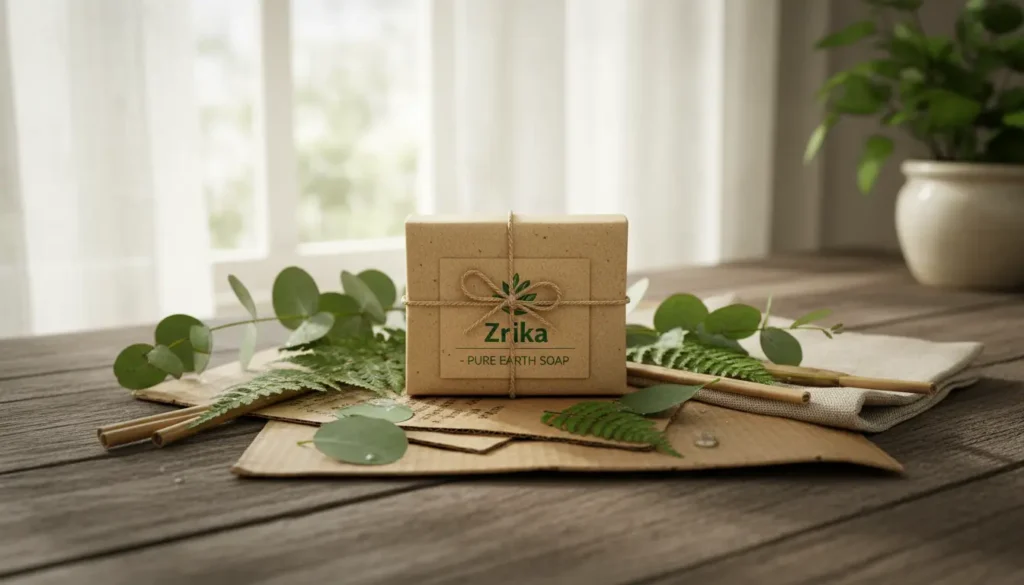
- Packaging: Recyclable paper or compostable materials (no plastic)
- Production: Cold-process method using 70% less energy than industrial soap manufacturing
- Sourcing: Fair-trade partnerships (our shea butter comes from women’s cooperatives in Ghana)
Why this matters beyond environmentalism: Using products that align with your values reduces cognitive dissonance. When your self-care harms the planet, there’s subtle psychological cost. Research shows eco-aligned behaviors increase life satisfaction and reduce eco-anxiety.
6. Craftsmanship You Can Actually Feel
Mass-produced soap: Made in hours using continuous production lines, 10,000+ bars per batch, glycerin extracted, synthetic fillers added.
Luxury natural soaps at Zrika: Made in small batches (80-120 bars), hand-poured, cured for 4-6 weeks.
Why curing matters: During curing, excess water evaporates and soap molecules continue reacting, creating denser, longer-lasting bars. Commercial soap skips this—they use heat to speed production, damaging beneficial compounds in the process.
The result you’ll notice:
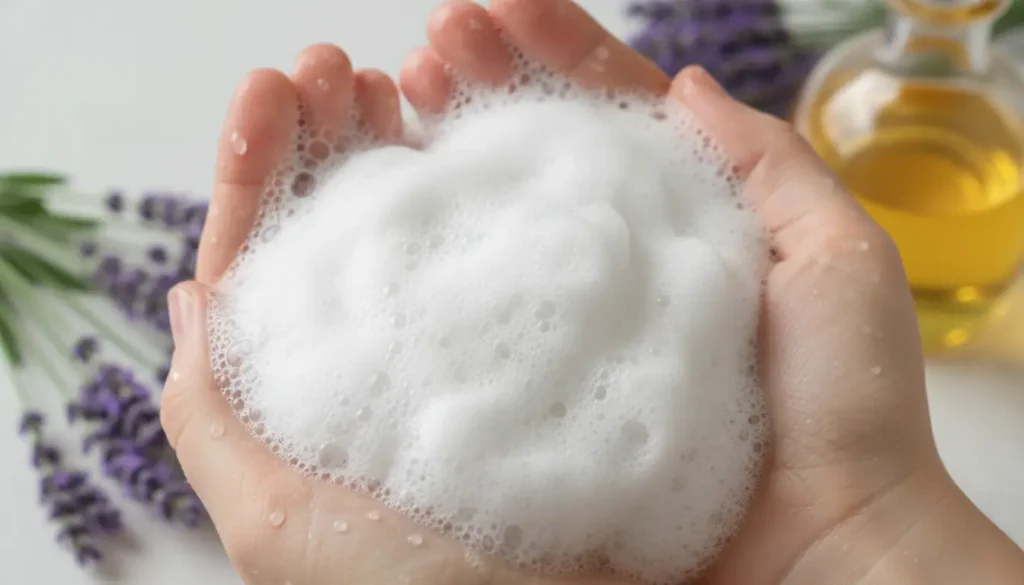
- Richer, creamier lather (from real saponified oils, not synthetic foaming agents)
- Bars last 4-6 weeks with daily use (some customers report 8+ weeks)
- Unique textures and slight variations between batches (proof of handcrafting, not mass production)
Cost per use: Our bars cost 120-160 versus 30-50 rupees for commercial soap. But they last 3-4x longer and eliminate the need for separate lotion to combat dryness. Actual cost per shower? Competitive or cheaper.
7. Longevity That Proves Quality
Cheap commercial soap dissolves quickly because it’s mostly fillers and water. The bar literally disintegrates in your soap dish.
Quality handcrafted organic soaps are dense, concentrated, and properly cured. They don’t turn to mush.
Storage tip: Use a draining soap dish. Standing water is the enemy of any soap, but especially natural ones without synthetic hardening agents. Proper storage extends life significantly.
Economic reality: One Zrika bar typically replaces 3-4 commercial bars. When you calculate actual usage cost plus the money saved on lotions you don’t need, natural soap is often less expensive long-term.
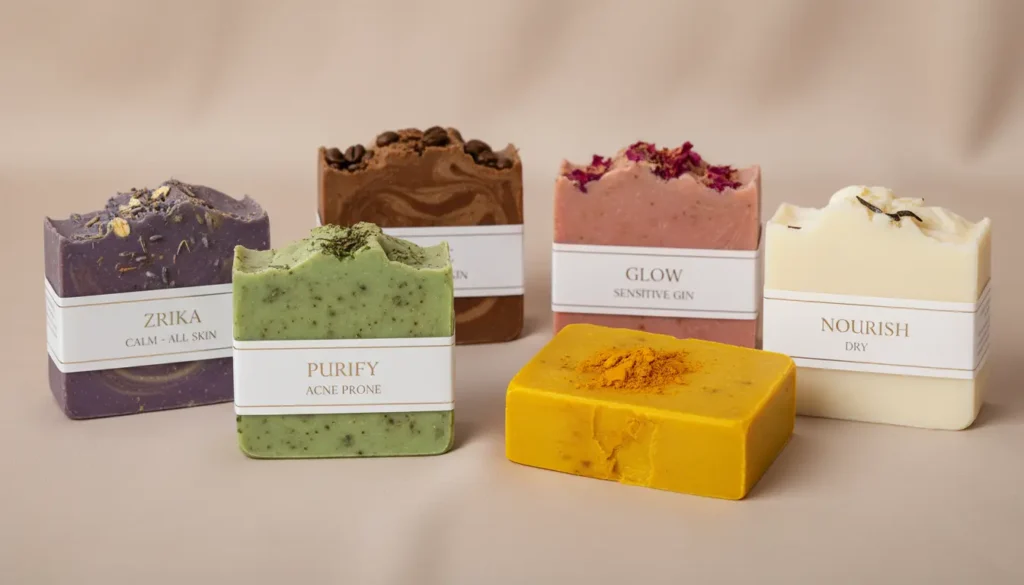
8. Gift-Worthy Aesthetics (Because Beauty Matters)
This might seem superficial, but aesthetics influence psychology.
Products that look beautiful and feel luxurious increase adherence. When your soap sits on your counter looking like art, you’re more likely to use it consistently and mindfully.
Luxury natural soaps often feature:
- Natural colorants (turmeric for gold, spirulina for green, cocoa for brown)
- Artisan designs (swirls, layers, botanical inclusions)
- Elegant packaging suitable for gifting
Why this matters: Self-care products that feel special encourage you to treat yourself as special. The psychological component of ritual matters as much as the chemical component of cleansing.
9. Skin That Glows From Health (Not Silicones)
Commercial products often use silicones to create instant “glow”—a surface shine that masks underlying dryness.
Luxury natural soaps with vitamin-rich oils and botanical extracts work differently. They improve:
- Cell turnover: Gentle exfoliation removes dead cell buildup
- Hydration: Barrier support means better moisture retention
- Circulation: Massage during cleansing plus essential oils stimulate blood flow
- Tone: Ingredients like turmeric and rose naturally brighten over time
Realistic timeline: Immediate softness happens within days. Visible “glow” (even texture, brightness, healthy appearance) takes 6-8 weeks of consistent use.
This isn’t Instagram-filter glow. It’s genuine skin health that photographs well because it’s real.
Matching Soap to Your Actual Skin Needs
Forget generic “skin type” categories. Here’s how to choose based on what your skin does right now:
| Current Skin Condition | Recommended Zrika Soap | Key Benefit |
| Dry, tight, flaky | Shea Butter & Almond | Deep hydration, barrier repair |
| Oily, breakout-prone | Charcoal Detox | Purifies pores, balances sebum |
| Reactive, easily irritated | Aloe & Chamomile | Calms inflammation, reduces redness |
| Normal, well-balanced | Rose & Sandalwood | Maintains natural glow and smoothness |
| Combination (oily + dry areas) | Mint & Lemongrass | Refreshes, evens out texture |
Pro tip: Your skin’s needs change seasonally. Winter might require shea butter richness. Summer might prefer lighter mint formulations. Stock both and rotate based on how your skin feels.
How to Actually Use Natural Soap (Most People Get This Wrong)
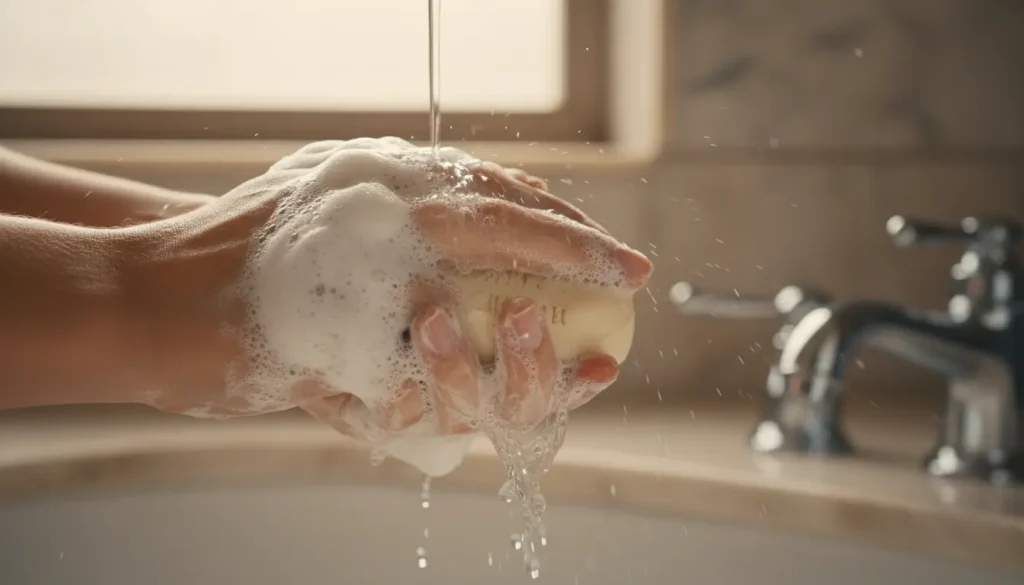
Step 1: Wet skin with warm water (not hot) Hot water damages your barrier. Warm water opens pores without stripping.
Step 2: Create lather in hands first Don’t rub the bar directly on dry skin—that’s harsh and wastes product. Build lather between palms.
Step 3: Apply with gentle circular motions You’re not scrubbing dishes. Gentle pressure is sufficient. Let the soap do the work.
Step 4: Let it sit for 30-60 seconds This allows beneficial ingredients to interact with your skin. Rushing defeats the purpose.
Step 5: Rinse thoroughly with warm water, finish with cool Cool water at the end helps close pores and signals your skin to calm down.
Step 6: Pat dry (don’t rub) Rubbing with a towel creates friction and irritation. Patting removes water while leaving some moisture.
Step 7: Apply body cream within 3 minutes Damp skin absorbs moisturizer significantly better than completely dry skin. This timing matters.
The Ingredients That Actually Matter
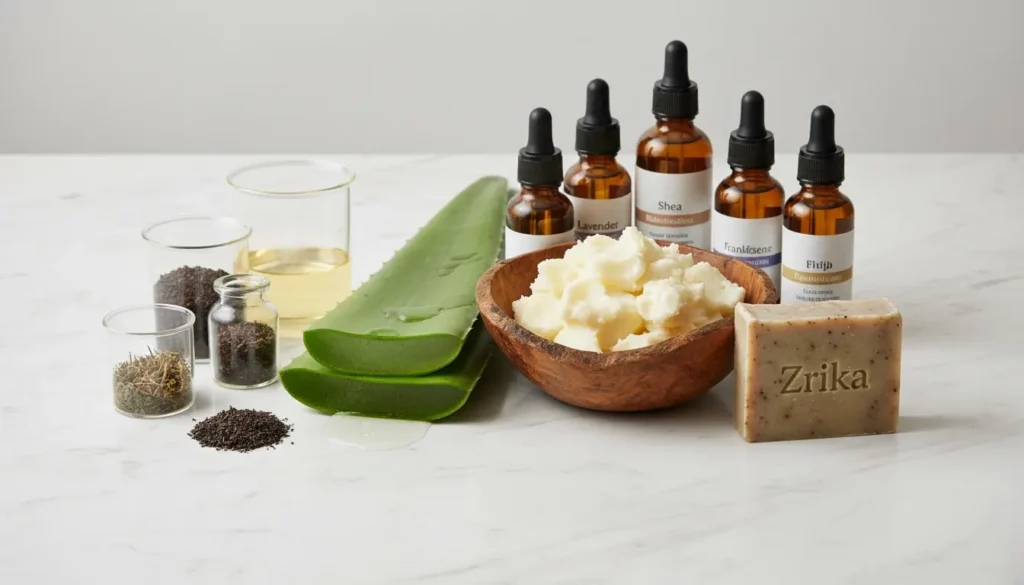
At Zrika, transparency isn’t optional. Here’s exactly what goes into luxury natural soaps:
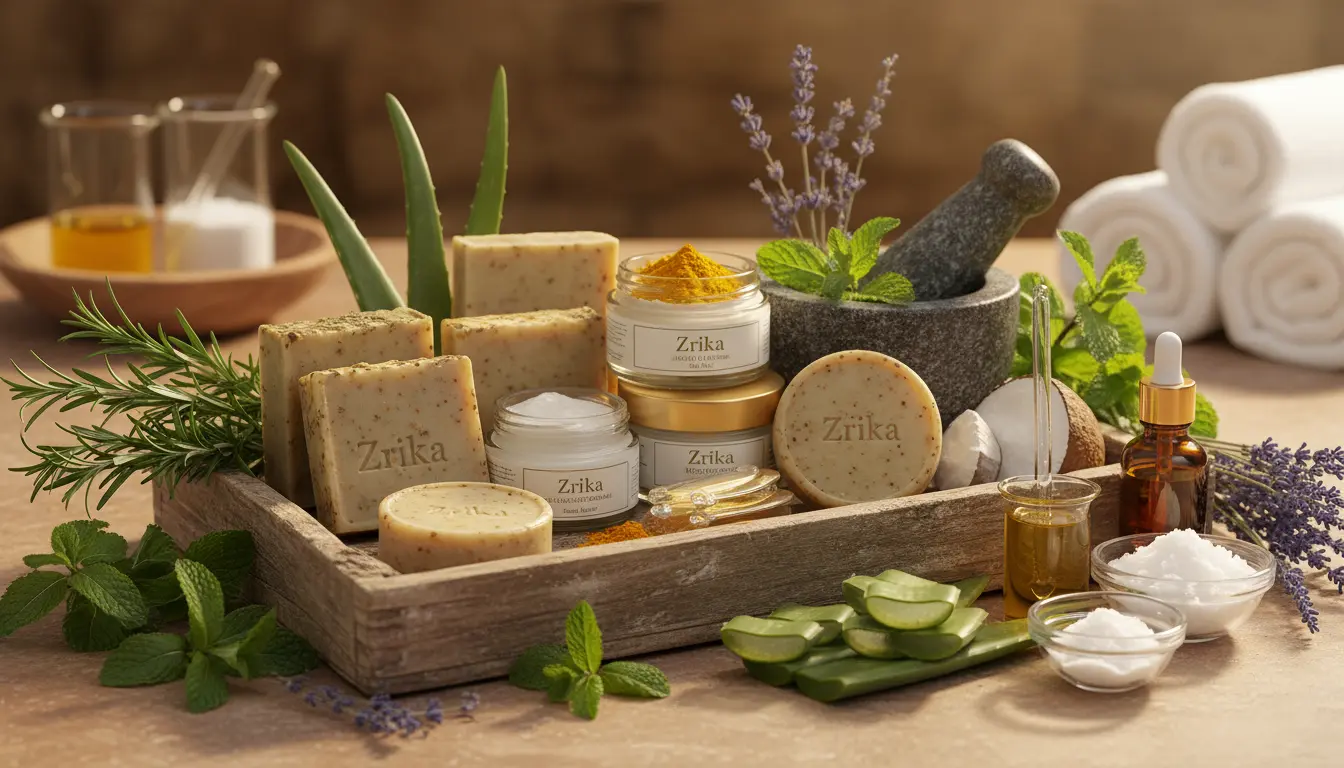
Base Oils (saponified):
- Coconut oil: Creates lather, gentle cleansing
- Olive oil: Moisturizing, rich in antioxidants
- Sweet almond oil: Vitamin E, easily absorbed
- Shea butter: Intensive moisture, barrier support
Botanicals:
- Aloe vera: Cooling, anti-inflammatory
- Turmeric: Brightening, reduces hyperpigmentation
- Chamomile: Calming, reduces redness
Essential Oils:
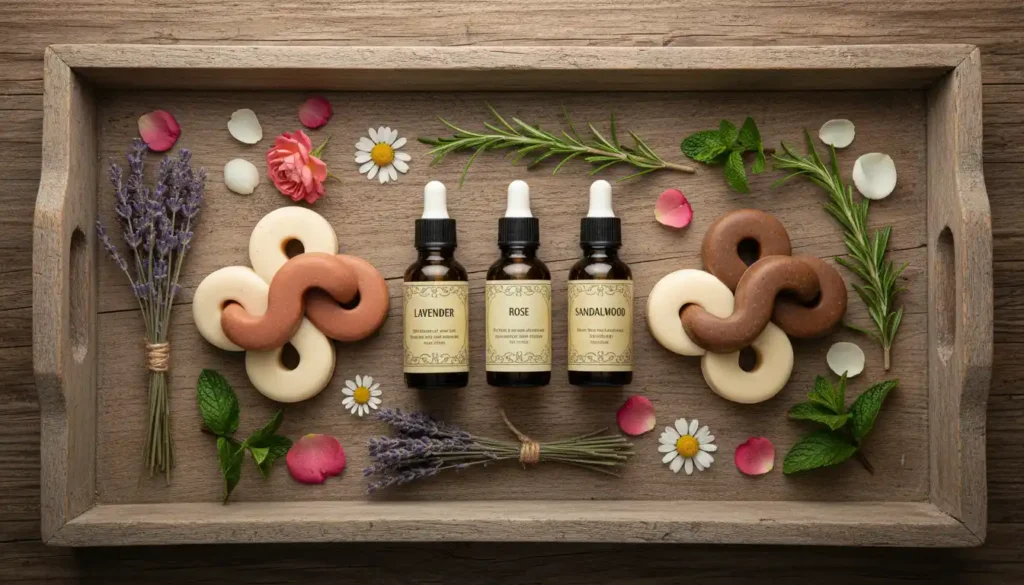
- Lavender: Relaxing, antimicrobial
- Rose: Mood-elevating, skin conditioning
- Sandalwood: Calming, anti-inflammatory
What’s NEVER included:
- Sulfates (SLS/SLES)
- Parabens
- Synthetic fragrances
- Artificial colors
- Palm oil (environmental concerns)
- Animal-derived ingredients (we’re vegan)
Frequently Asked Questions
- Are Zrika’s luxury natural soaps genuinely suitable for all skin types, including sensitive?
Yes, though specific formulations work better for specific needs. Our base formulations are hypoallergenic and dermatologically tested, suitable for most people including those with sensitive skin. However, “natural” doesn’t mean “non-allergenic”—some people react to botanical ingredients. We recommend patch testing, especially if you have known allergies. Our unscented, minimal-ingredient Aloe & Chamomile soap has the highest success rate with truly reactive skin. For severe conditions like eczema or psoriasis, consult a dermatologist—handcrafted organic soaps can support care but aren’t medical treatment. - What actually makes Zrika soaps different from regular drugstore soap bars beyond marketing?
The fundamental difference is formulation and production method. Drugstore “soap” is often synthetic detergent with glycerin removed, plus synthetic fragrances, colors, and preservatives. Zrika soaps are made through traditional cold-process saponification using plant oils—glycerin stays in the product. We cure for 4-6 weeks (commercial soap is made in hours using heat that damages beneficial compounds). Ingredients are transparently listed with sources. The result: products that cleanse without stripping, nourish while cleaning, and don’t require separate lotion to combat dryness they caused. - Can you really use these soaps daily, or will they eventually dry out your skin?
Daily use is not just safe—it’s ideal when formulated correctly. Unlike commercial detergent bars that strip everything (requiring increasingly frequent moisturizing), quality luxury natural soaps preserve your barrier function. Most customers find they need less moisturizer after switching, not more. The retained glycerin and nourishing oils mean daily cleansing supports rather than undermines skin health. However, if you have extremely dry skin, alternating between soap cleansing and just warm water rinses might work better. Listen to your skin’s feedback. - Are Zrika products genuinely cruelty-free and vegan, or is that just labeling?
All Zrika products are 100% vegan (zero animal-derived ingredients) and completely cruelty-free (no testing on animals by us, suppliers, or third parties). We don’t sell in markets requiring animal testing. We’re pursuing Leaping Bunny certification (independent audit standard for cruelty-free). This commitment aligns with sustainability because plant-based ingredients have significantly lower environmental impact than animal-derived alternatives. Compassionate and sustainable beauty aren’t separate—they’re interconnected values. - How long does one soap bar actually last with daily use?
With proper storage (draining soap dish, dry between uses), a Zrika bar typically lasts 4-6 weeks with daily full-body use. Some customers report 8+ weeks. Longevity depends on: water hardness (soft water dissolves soap faster), storage conditions (standing water shortens life dramatically), and usage amount (you need less lather than you think). Commercial bars last 1-2 weeks because they’re mostly fillers. Despite higher upfront cost, cost-per-use for quality natural soap is competitive or cheaper—especially when you factor in reduced lotion needs. - Do Zrika soaps contain artificial fragrance, or are scents from essential oils?
All scents come exclusively from pure essential oils—never synthetic fragrance. “Fragrance” on conventional soap labels can hide thousands of undisclosed chemicals (phthalates, allergens, hormone disruptors). Essential oils provide natural aroma plus aromatherapy benefits through olfactory-limbic pathways. However, essential oil scents fade within 30-60 minutes after use (unlike synthetic fragrances that linger for hours). Some customers initially say our soaps “don’t smell strong enough”—that’s by design. Persistent artificial scents require chemicals we refuse to use. We also offer unscented versions for those sensitive to any scents. - Can you use Zrika soap on your face, or is it only for body?
Our gentle formulations can be used on face and body, though we recommend starting cautiously on facial skin (which is thinner and more sensitive than body skin). Test on chin area first. Never use exfoliating soaps on face. For daily facial cleansing, our Aloe & Chamomile or Rose & Sandalwood soaps work well for most people. However, if you have specific facial concerns (severe acne, rosacea, perioral dermatitis), consult a dermatologist—you may need medical-grade facial cleansers. Luxury natural soaps excel for body care; facial care sometimes requires more specialized formulations. - How should natural soaps be stored to maximize freshness and longevity?
Proper storage is critical. Use a draining soap dish—standing water turns any soap (especially natural ones without synthetic hardening agents) into mush. Keep soap away from direct shower spray when not in use. Let it dry completely between uses. Store backup bars in cool, dry place (not humid bathroom). Avoid direct sunlight (degrades essential oils). Properly stored, bars maintain quality for months before use and 4-8 weeks during use. Poor storage (wet soap dish, constant humidity) can reduce life by 50%+. - Where can you purchase authentic Zrika luxury natural soaps and verify ingredient sourcing?
All products available exclusively at Zrika Bodycare with complete ingredient lists, sourcing documentation, and usage guides. We provide supplier information, fair-trade certifications, and testing results transparently. Sample sizes (1oz) available for testing before full-size commitment—we’d rather you test successfully than buy full-size and react badly. 30-day satisfaction guarantee. Free shipping over 999 rupees. We believe genuine luxury natural soaps require proof of claims, not just marketing promises.
Your Next Step: Choose Quality Over Convenience
You don’t need to overhaul everything tonight. Start with one bar.
This week: Purchase one Zrika soap matched to your primary skin concern. Use it exclusively for 3 weeks. Note how your skin feels—tightness, softness, irritation, hydration.
After 3 weeks: Honestly evaluate. Is your skin better, same, or worse? That answer tells you everything about whether natural soap works for your specific skin.
If better: Expand your natural routine with body cream and other products.
If same or worse: Try a different formulation (maybe you need more or less moisture, or you’re reacting to a specific botanical).
The goal isn’t perfection—it’s finding what actually works for YOUR skin, not what works in marketing claims.
Ready to Stop Stripping Your Skin Twice Daily?
Your skin deserves a daily ritual that feels indulgent, not routine. At Zrika Bodycare, we invite you to experience the difference that luxury natural soaps can make — where every cleanse restores balance instead of stripping it away. Our handcrafted organic soaps are made in small batches using ethically sourced ingredients and pure essential oils that deliver authentic aromatherapy. Each bar is thoughtfully designed to suit your skin type, leaving it nourished, radiant, and deeply refreshed. With vegan, cruelty-free formulations, eco-friendly packaging, and a 30-day satisfaction guarantee, you can explore your new skincare favorite with complete confidence. Discover the Zrika Bodycare collection today and embrace skincare that’s as conscious as it is luxurious.
About Zrika Bodycare
At Zrika, luxury natural soaps aren’t just products—they’re a commitment to transparency, quality, and genuine skin health. Every bar represents:
- Small-batch artisan craftsmanship (80-120 units per batch)
- Cold-process methods preserving beneficial compounds
- 4-6 week curing for density and longevity
- Fair-trade ingredient partnerships (shea butter from Ghana women’s cooperatives)
- Complete ingredient transparency with sourcing documentation
- Zero synthetic additives, fragrances, or animal testing
Because your skin deserves honest ingredients and proven methods—not marketing hype.
Disclaimer: This article shares skincare insights based on formulation experience and available research. It doesn’t replace dermatological advice. For persistent skin concerns, consult appropriate professionals.