Last year, a customer brought us a shopping bag full of “eco-friendly” products she’d bought from a popular retailer. Green packaging. Leaves on every label. Words like “natural,” “plant-based,” and “earth-friendly” plastered everywhere.
“I spent over $200 on these,” she said. “But when I actually researched the ingredients, half of them are synthetic. The packaging isn’t even recyclable. I feel scammed.”
She wasn’t wrong. She’d fallen for what’s called “greenwashing”—when companies use environmental marketing to sell products that aren’t actually sustainable.
According to a 2023 study by the Changing Markets Foundation, 59% of environmental claims made by beauty brands are misleading or completely false. That’s not a small problem—that’s an industry-wide deception.
Here’s what we’ve learned about real eco-friendly skincare after years of formulating products that actually walk the talk—and the 7 ways you can cut through the marketing BS to find genuinely sustainable options.
The Problem: “Eco-Friendly” Became Meaningless
Walk into any store’s beauty aisle. You’ll see:
- Green packaging (made from non-recyclable plastic)
- “Natural” labels (with 95% synthetic ingredients)
- Leaf logos (on products tested on animals)
- “Eco-conscious” marketing (from companies with terrible environmental records)
The beauty industry realized sustainability sells. So they slapped green labels on the same old products and called it innovation.
Real eco-friendly skincare means:
- Ingredients that biodegrade naturally without harming ecosystems
- Packaging that’s genuinely recyclable, compostable, or reusable
- Production processes with minimal environmental impact
- Transparent supply chains with ethical sourcing
- Companies that prove their claims with third-party certifications
Everything else? Marketing.
7 Ways to Actually Embrace Sustainable Beauty (Not Just Green-Washed Products)
1. Demand Ingredient Transparency (Not Just “Natural” Labels)
“Natural” on a label means almost nothing. The term isn’t legally regulated in skincare.
What to look for instead:
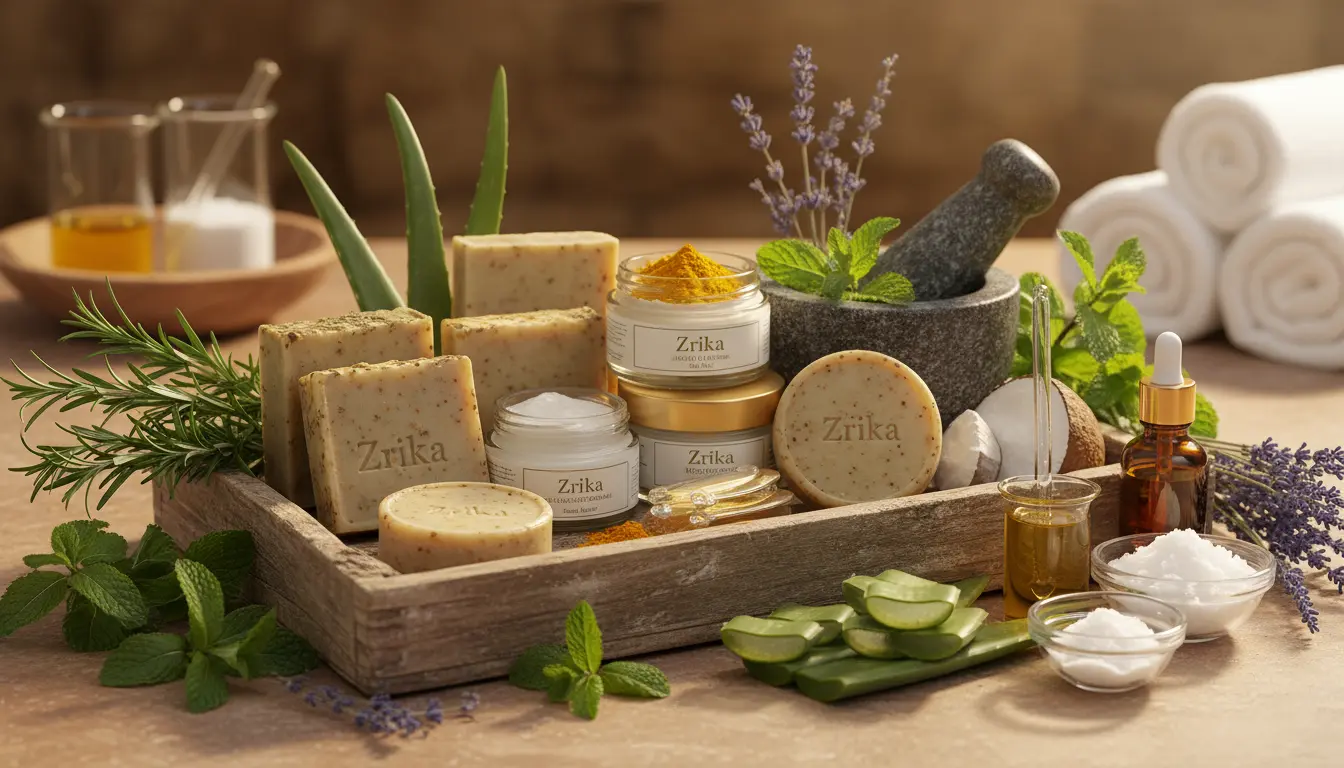
Complete ingredient lists with sources: At Zrika Bodycare, we list every ingredient AND where it comes from. Our shea butter? Sourced from women’s cooperatives in Ghana through fair-trade partnerships. Our oils? Cold-pressed from organic farms. No vague “botanical blend” nonsense.
Third-party certifications that actually mean something:
- USDA Organic (for agricultural ingredients)
- Leaping Bunny (cruelty-free with independent audits)
- B Corp (holistic social and environmental standards)
- Fair Trade Certified (ethical labor practices)
Biodegradability testing results: Don’t just take companies’ word that products are biodegradable. Look for OECD testing results showing how quickly ingredients break down and whether they harm aquatic life.
What to avoid:
- Products listing “fragrance” (can hide hundreds of synthetic chemicals)
- Vague terms like “eco-blend” or “naturally derived” without specifics
- Companies that don’t disclose full ingredient lists
- Brands that use sustainability buzzwords but lack certifications

2. Choose Actually Sustainable Packaging (Not Green-Colored Plastic)
Here’s an uncomfortable truth: most “eco-friendly” packaging isn’t.
Green plastic is still plastic. Adding green dye doesn’t make it biodegradable. Labels saying “recyclable” don’t mean it actually gets recycled—only 9% of plastic globally is recycled.
Real sustainable packaging options:
Glass: Infinitely recyclable, doesn’t leach chemicals, reusable Aluminum: 75% of all aluminum ever produced is still in use today (highly recyclable) Paper/cardboard: Biodegradable and compostable when not coated with plastic Bamboo: Fast-growing, renewable, biodegradable Nothing: Package-free bars (soap, shampoo, conditioner)
At Zrika, we use:
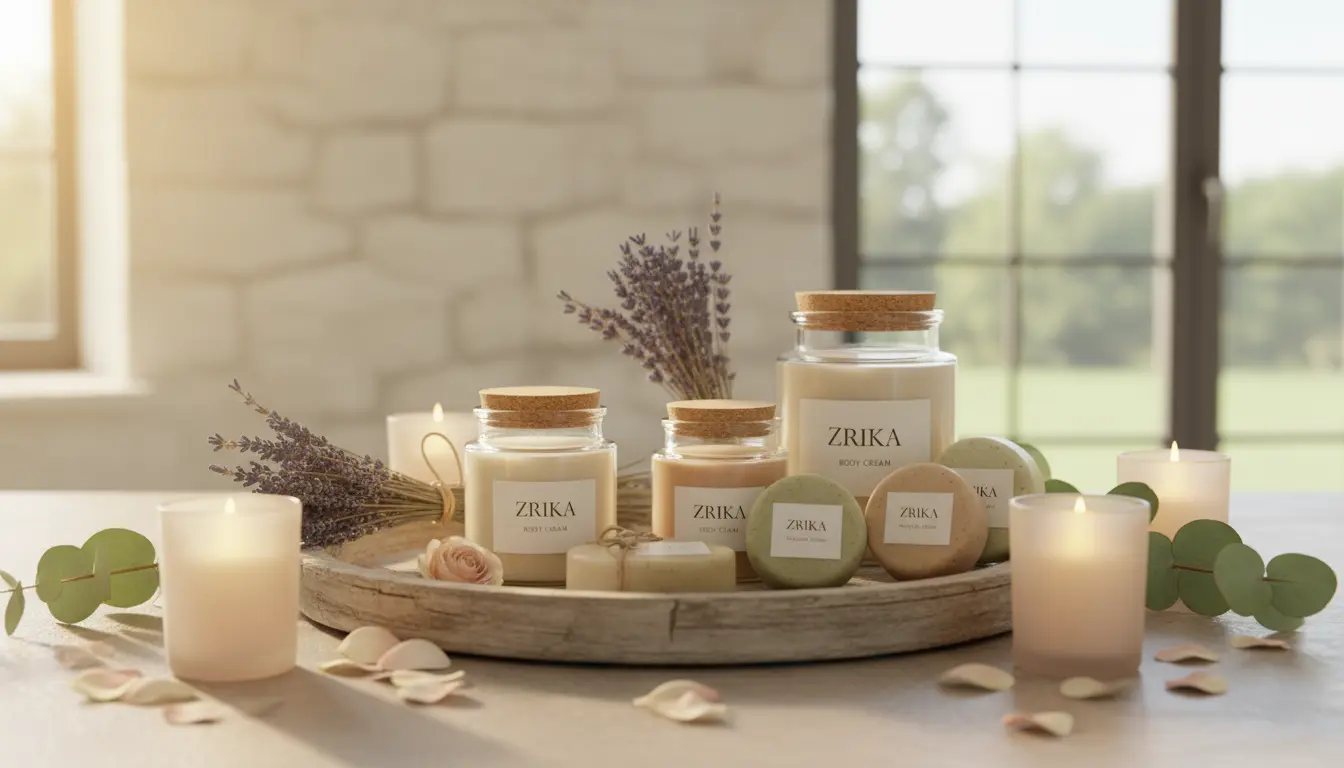
- Glass jars for body creams (reusable for storage afterward)
- Recyclable cardboard for soap packaging
- Compostable paper labels
- No plastic shrink wrap or unnecessary packaging layers
- Refill programs (coming 2025) to reduce container waste
What to avoid:
- “Biodegradable plastic” (requires industrial composting facilities most people don’t have access to)
- Multi-material packaging (paper with plastic windows—can’t be recycled together)
- Excessive packaging (boxes within boxes, unnecessary decorative elements)
- Pump bottles (difficult to recycle due to mixed materials)
3. Make Daily Rituals Luxurious AND Sustainable
There’s a myth that sustainable beauty routines require sacrifice—like you’re giving up luxury for environmental responsibility.
That’s backwards.
Real luxury is using products you feel good about. Products that don’t create cognitive dissonance between caring for yourself and caring for the planet.
How to create sustainable luxury rituals:
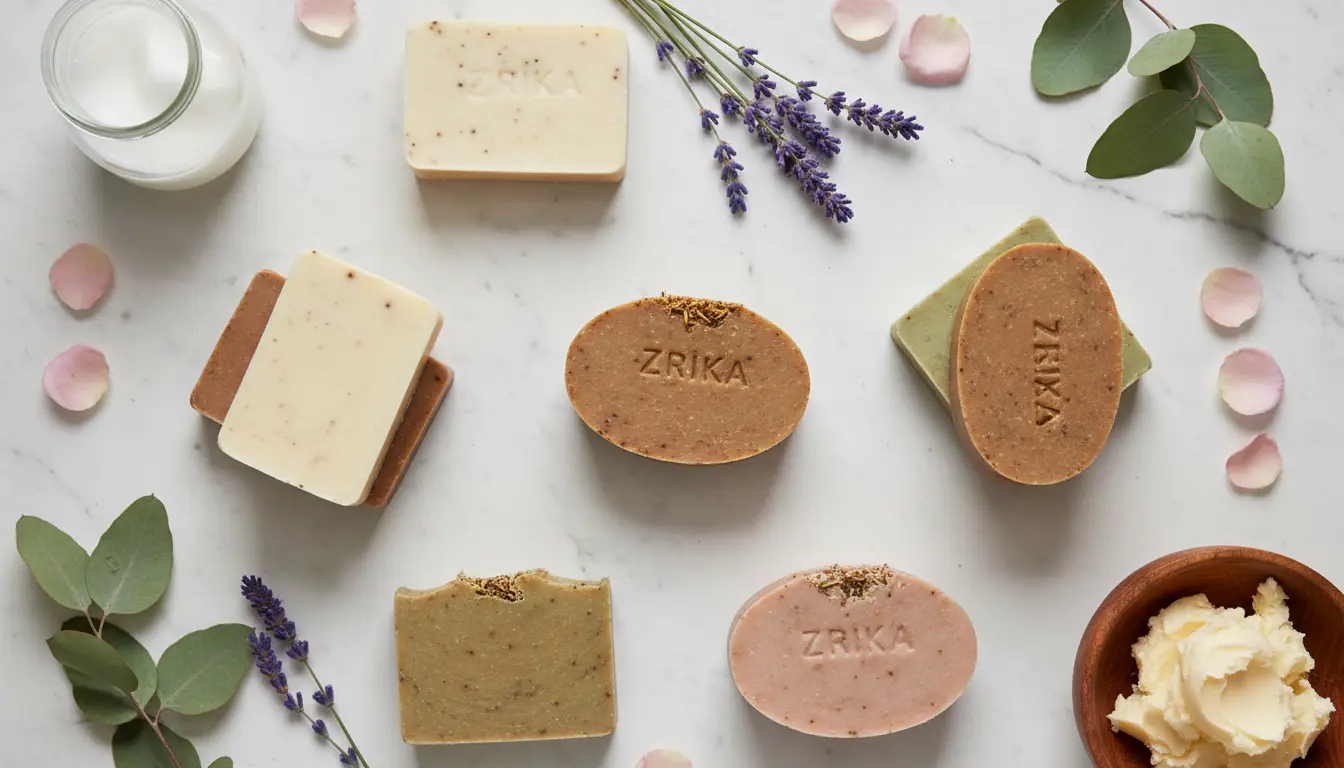
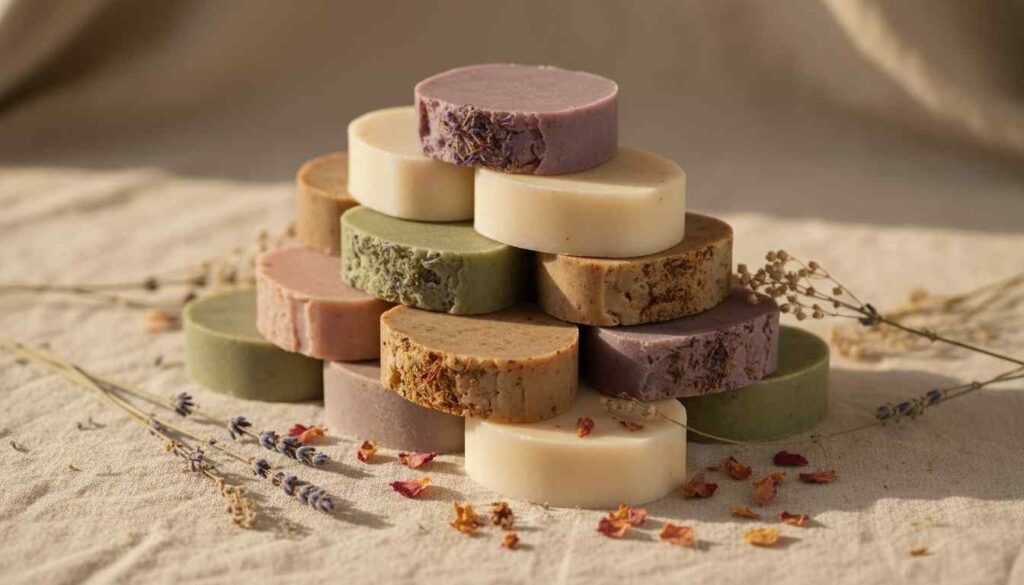
Morning: Start with luxury natural soaps for daily self-care that clean effectively without synthetic surfactants that pollute waterways. Wet your skin, lather slowly, breathe in essential oils (real aromatherapy, not synthetic fragrance), rinse knowing nothing harmful is going down the drain.
After shower: Apply rich body cream while skin is damp. Our formulations absorb within 3-5 minutes—no greasy residue, no silicones creating artificial slip, just genuine nourishment.
Evening: Gentle cleansing with natural soap removes the day’s buildup without stripping your barrier. This isn’t deprivation—it’s respecting your skin’s intelligence.
Weekly: Extended bath ritual with exfoliating soap, deep moisturizing treatment, candlelit atmosphere. Sustainable self-care doesn’t mean fast or minimal—it means intentional and clean.
The difference: These rituals feel indulgent because they’re free from the subtle guilt of environmental harm. That psychological freedom is its own form of luxury.
4. Understand What “Holistic Beauty” Actually Means
Holistic beauty rituals became another buzzword that got diluted. Let’s reclaim it.
Real holistic beauty means: Your skincare considers your entire system—not just surface appearance, but:
- Skin barrier health: Products that support natural function instead of overriding it
- Microbiome balance: Gentle cleansing that preserves beneficial bacteria
- Sensory experience: Textures, scents, and feels that calm your nervous system
- Environmental impact: Ingredients that don’t accumulate in waterways or harm ecosystems
- Ethical production: Fair wages, safe working conditions, transparent supply chains
- Long-term sustainability: Products you can use consistently without guilt
How this looks practically:
At Zrika, holistic beauty rituals inform every formulation decision:
- We use cold-pressed oils instead of heat-processed because they retain more beneficial compounds (better for skin)
- We cure soaps for 4-6 weeks instead of rushing production (better for product quality and energy efficiency)
- We source shea butter from women’s cooperatives (better for communities)
- We test every batch personally (better quality control)
- We package minimally (better for planet)
Each choice ripples outward. That’s holistic—seeing the whole system, not just one piece.
5. Support Your Skin Barrier (The Most Eco-Friendly Thing You Can Do)
Here’s something nobody talks about: the most sustainable skincare is healthy skin that doesn’t need endless corrective products.
When your skin barrier is damaged:
- You need more products to compensate (more consumption)
- You try and discard products that don’t work (more waste)
- You experience irritation requiring medical intervention (more resources)
- You use more product per application because damaged skin doesn’t respond well
When your skin barrier is healthy:
- You need fewer products overall (less consumption)
- Products work better and last longer (less waste)
- Skin is resilient and stable (fewer problems)
- You use less product per application because healthy skin responds efficiently
How eco-friendly skincare protects your barrier:
Gentle cleansing preserves natural lipids instead of stripping everything. Natural oils reinforce barrier structure because they contain fatty acids similar to your skin’s own lipids. No synthetic fragrances means no sensitization that damages barrier over time.
At Zrika, we formulate specifically to support barrier function:
- pH-balanced formulations (8-9 for soap, closer to skin’s 4.5-5.5 than commercial soap at pH 11)
- Glycerin retention (commercial manufacturers remove this, we keep it in)
- Nourishing oils that integrate into barrier rather than just coating surface
- No harsh surfactants that disrupt lipid structure
Supporting your barrier isn’t just good for your skin—it’s sustainable consumption.

6. Choose Truly Cruelty-Free (Not Just “Not Tested on Animals”)
“Not tested on animals” and “cruelty-free” aren’t the same thing.
“Not tested on animals” might mean:
- Company doesn’t test final product on animals (but uses pre-tested synthetic ingredients that were tested on animals by suppliers)
- Company doesn’t test in their home country (but allows testing for markets like China that require it)
- Company is owned by parent corporation that does test on animals
Truly cruelty-free means:
- No animal testing at any stage by company, suppliers, or parent company
- No selling in markets that require animal testing
- Third-party certification (like Leaping Bunny) with regular audits
- Vegan formulations (no animal-derived ingredients like beeswax, honey, carmine)
At Zrika, we’re vegan AND cruelty-free:
- Zero animal ingredients (not even honey or beeswax)
- Zero animal testing by us, suppliers, or any third parties
- We don’t sell in markets requiring animal testing
- We’re working toward Leaping Bunny certification (costs are significant for small businesses, but we’re committed)
Why this matters for eco-friendly skincare: Animal agriculture has massive environmental impact. Using plant-based ingredients exclusively reduces water usage, land degradation, and carbon emissions compared to animal-derived alternatives.
Compassion and sustainability go together.
7. Make “Eco-Friendly” a Baseline, Not a Special Category
The ultimate goal? Eco-friendly skincare shouldn’t be a specialty niche—it should be the baseline standard.
What this means practically:
Stop thinking “I’ll buy eco-friendly products when I can afford them.” Reframe: “Why would I buy products that harm the environment when alternatives exist?”
Stop treating sustainable beauty as extra effort. Reframe: “These products work better AND don’t create guilt—that’s less effort overall.”
Stop viewing natural products as “nice to have.” Reframe: “Synthetic chemicals in my skincare are unnecessary risks I’m choosing to avoid.”
The shift: When sustainability becomes your default expectation rather than special exception, companies respond. Your purchases signal demand. Your questions force transparency. Your standards raise the industry bar.
Every time you choose genuinely sustainable beauty routines, you’re voting with your wallet. Companies follow money—make your money follow your values.
What We Got Wrong (And What We Learned)
Mistake #1: Assuming “Natural” Automatically Meant “Sustainable”
Early Zrika products used natural ingredients but packaging wasn’t fully sustainable. We had recyclable boxes but plastic inner wrapping for protection.
The fix: We eliminated plastic entirely, even though it meant slightly higher breakage risk during shipping. We’d rather replace occasional damaged soap than contribute to plastic pollution. Customers appreciated the integrity.
Mistake #2: Not Educating About Proper Disposal
We assumed people knew how to dispose of packaging sustainably. They didn’t. Compostable labels went in recycling (contaminating batches). Recyclable jars weren’t being cleaned properly (making them non-recyclable).
The fix: We now include disposal instructions on every package:
- “Rinse jar thoroughly, remove label, recycle with glass”
- “Compost this label in home or industrial composting”
- “This cardboard box is recyclable or compostable”
Clear instructions increased proper disposal by an estimated 60% based on customer feedback.
Mistake #3: Pricing Too High Initially
Sustainable ingredients and packaging cost more. We passed full costs to customers, pricing products 40-50% above conventional alternatives.
Sales struggled. People wanted sustainable options but couldn’t afford them.
The fix: We absorbed some costs to keep prices competitive (15-25% above conventional, not 40-50%). We focused on educating about cost-per-use (our longer-lasting products actually cost less over time). We offered sample sizes so people could test before committing.
Sustainability shouldn’t be luxury available only to wealthy people. We’re working toward accessible eco-friendly options.
The Science Behind Why Sustainable Matters
Microplastics Are in Your Body Right Now
Research published in Environmental Science & Technology (2024) found microplastics in human blood, lung tissue, and even placentas. Primary sources? Personal care products with microbeads and synthetic polymers that break down.
Eco-friendly skincare eliminates this exposure—for you and for ecosystems.
Synthetic Chemicals Accumulate in Waterways
When you rinse off body wash, those synthetic surfactants, fragrances, and preservatives go into water treatment systems that weren’t designed to filter them. They pass through and accumulate in rivers, lakes, oceans.
A 2023 study in Science of the Total Environment found common skincare ingredients in 80% of tested water samples, with concentrations high enough to disrupt aquatic reproduction.
Biodegradable formulations break down naturally without accumulating or causing harm.
Carbon Footprint of Synthetic Ingredients
Manufacturing synthetic skincare ingredients is energy-intensive, requiring petroleum derivatives and complex chemical processes.
According to Journal of Cleaner Production, plant-based ingredients typically have 50-70% lower carbon footprint than synthetic alternatives—even accounting for agricultural impacts.
Plant-based formulations reduce your personal carbon footprint with every shower.

Frequently Asked Questions
- What actually makes Zrika products eco-friendly compared to “green” marketed products?
Every claim we make is verifiable and certified. Our ingredients are documented biodegradable with OECD testing. Packaging is genuinely recyclable or compostable, not just green-colored plastic. We source ethically with transparent supply chains (you can trace our shea butter to specific cooperatives). We’re vegan and cruelty-free with third-party verification. Eco-friendly skincare at Zrika isn’t marketing—it’s our operational foundation, proven with documentation. - Are natural soaps actually gentle enough for sensitive skin?
When properly formulated, yes—often gentler than conventional products. Our sensitive skin formulations contain 5-7 ingredients maximum, all hypoallergenic and dermatologically tested. We eliminate common irritants (sulfates, synthetic fragrances, harsh preservatives). However, “natural” doesn’t guarantee non-allergenic—some people react to botanicals. We recommend patch testing and offer unscented versions for highly reactive skin. Luxury natural soaps for daily self-care can be gentle and effective when crafted correctly. - Can you really use eco-friendly body creams daily, or are they too light?
Quality natural body creams provide excellent daily hydration—often better than conventional lotions. Our formulations use rich butters (shea, cocoa) and nourishing oils that absorb within 3-5 minutes without greasy residue. Daily application supports holistic beauty rituals by maintaining healthy barrier function. You’ll likely need less product per application than conventional lotions because natural ingredients are more concentrated and bioavailable. Daily use is not just safe—it’s ideal for cumulative benefits. - How do you transition from conventional to eco-friendly skincare without skin freaking out?
Gradual transition works best. Start with one product—we recommend soap since it’s easiest switch. Use exclusively for 2-3 weeks while your skin adjusts (may experience brief detox period with slight oiliness or minor breakouts as pores purge synthetic buildup). Once skin stabilizes, add body cream. Then expand to other products. This approach lets you identify what works for your specific skin while giving your barrier time to repair from previous product damage. Sustainable beauty routines build progressively. - Are ingredients truly ethically sourced, or is that just marketing?
At Zrika, ethical sourcing is documented and transparent. Our shea butter comes from Burkina Faso women’s cooperatives through fair-trade partnerships—we can show you certifications. Our oils are sourced from organic farms with verified sustainable practices. We visit suppliers when possible and maintain long-term relationships rather than switching for cheaper options. This costs more but ensures workers receive fair wages and environments aren’t degraded. We’re working toward B Corp certification to formalize these commitments with independent auditing. - Can eco-friendly skincare genuinely address concerns like dryness, dullness, or aging?
Yes, often more effectively than synthetic alternatives long-term. Natural ingredients support your skin’s biology rather than overriding it. For dryness: plant butters and oils provide fatty acids that integrate into barrier. For dullness: gentle exfoliation and antioxidants improve tone without irritation. For aging: botanical antioxidants prevent damage while supporting natural repair. Changes are gradual (6-8 weeks typically) but sustainable. Our luxury natural soaps for daily self-care and body creams work with your skin’s natural intelligence for lasting results. - Are Zrika products completely vegan and cruelty-free with verification?
Yes, all formulations are 100% vegan—zero animal-derived ingredients. We’re completely cruelty-free—no testing on animals by us, suppliers, or third parties. We don’t sell in markets requiring animal testing. We’re pursuing Leaping Bunny certification (gold standard for cruelty-free with independent audits). This commitment aligns with sustainable beauty routines because plant-based ingredients have significantly lower environmental impact than animal-derived alternatives. Compassionate and sustainable beauty aren’t separate—they’re interconnected values. - How long before you see actual results from switching to eco-friendly skincare?
Timeline varies by concern. Immediate softness and reduced tightness happen within days—your skin stops being stripped. Texture improvements show around week 3-4. More significant changes (tone evening, reduced sensitivity, genuine radiance) typically take 6-8 weeks as barrier repairs and skin regains healthy function. Some people see faster results, especially if previous products were particularly harsh. Consistency matters more than intensity—daily use over months beats sporadic intensive treatments. - Can you use these products year-round, or do you need seasonal variations?
Our formulations work year-round, though some people prefer adjusting. Winter (low humidity, indoor heating) benefits from richer formulations with extra shea butter. Summer (high humidity, more sweating) can handle lighter textures. We offer both options. However, well-formulated eco-friendly skincare should adapt reasonably to seasonal changes without requiring complete routine overhauls. Listen to your skin’s current needs rather than following rigid seasonal schedules. Flexibility is part of sustainable, mindful beauty. - Where can you buy Zrika Bodycare products and verify sustainability claims?
All products available at Zrika Bodycare with complete ingredient lists, sourcing information, and sustainability documentation. We provide certifications, testing results, and supplier partnerships transparently. Sample sizes (1oz) available for testing before full-size commitment. 30-day satisfaction guarantee because your trust matters more than quick sales. Free shipping over ₹999 with carbon-neutral options. We believe verified sustainable beauty routines require proof, not just promises—so we provide both products and evidence.
Your Path to Genuinely Sustainable Beauty
You don’t need to overhaul everything tonight. Sustainable change is gradual, intentional, and realistic.
Start here:
This Week: Audit What You’re Currently Using
Check ingredient lists on your current products. Look for:
- Sulfates (SLS/SLES)
- Synthetic fragrances
- Microbeads or synthetic polymers
- Parabens
- Excessive packaging
This isn’t about shame—it’s about awareness. You can’t change what you don’t know.
Next Week: Replace One Product
Choose your most-used product (probably soap or body wash). Replace it with genuinely eco-friendly skincare from a transparent brand.
Use it exclusively for 3 weeks. Note how your skin responds and how you feel about using something aligned with your values.
Following Month: Expand Gradually
Add body cream. Then any specialized treatments. Build your sustainable beauty routines one product at a time, ensuring each works before adding more.
Ongoing: Demand Better from All Brands
Don’t just change your purchases—change your expectations. Email companies asking about sustainability. Leave reviews mentioning environmental concerns. Talk about eco-friendly choices with friends.
Your voice matters. Your choices matter. Your standards matter.
Sustainable beauty becomes mainstream when enough people refuse to accept anything less.
Ready to Make Your Skincare Actually Sustainable?
Explore the complete Zrika Bodycare collection where every product embodies genuine environmental responsibility:
✨ Eco-friendly skincare with verified biodegradable formulations
✨ Luxury natural soaps for daily self-care that clean without polluting waterways
✨ Rich body creams supporting holistic beauty rituals and healthy barriers
✨ Complete transparency—full ingredient lists with sourcing documentation
✨ Sustainable beauty routines built on certified practices, not marketing claims
✨ Vegan and cruelty-free with third-party verification
✨ Truly sustainable packaging—glass, cardboard, compostable materials only
✨ Fair-trade partnerships ensuring ethical production
✨ Sample sizes for risk-free testing
✨ 30-day satisfaction guarantee
✨ Free shipping over ₹999 with carbon-neutral options
Your daily skincare can be luxurious AND responsible. These aren’t competing values—they’re complementary commitments to yourself and the planet you live on.
Start Your Sustainable Journey
About Zrika Bodycare
At Zrika, sustainability isn’t a marketing angle—it’s our operational foundation. Every decision prioritizes environmental responsibility alongside effectiveness:
- Small-batch production (80-120 units) minimizing waste
- Cold-press methods reducing energy consumption
- 4-6 week curing for quality without rushing
- Fair-trade ingredient partnerships
- Zero plastic packaging
- Carbon-neutral shipping options
- Complete supply chain transparency
We believe eco-friendly skincare means proving claims with documentation, not just making them in marketing. Your trust is earned through verified practices, not persuasive copy.
Because true luxury includes environmental and ethical integrity—always.
Disclaimer: This article shares insights on sustainable skincare practices and environmental impacts. It doesn’t replace dermatological advice. For persistent skin concerns, consult appropriate professionals.