Last summer, a customer came to our workshop visibly frustrated. Her dermatologist had given her a diagnosis: contact dermatitis. The culprit? The “gentle” soap she’d been using for three years.
“How is this possible?” she asked. “The bottle says ‘for sensitive skin.’ It says ‘dermatologist tested.’ How did I end up with a rash?”
We looked at the ingredient list together. Sodium lauryl sulfate. Synthetic fragrance. Formaldehyde-releasing preservatives. By the fifth ingredient, we understood the problem.
She wasn’t using the wrong soap for her skin type—she was using something that wasn’t really soap at all.
This happens more often than you’d think. According to dermatological surveys, an estimated 73% of people use cleansers that don’t match their actual skin needs. They choose based on marketing, fragrance, or what’s on sale—not what their skin actually requires.
Here’s what we’ve learned about finding the best soap for skin type after formulating products for thousands of customers with wildly different skin needs.
The Problem Nobody Explains: Your Skin Type Isn’t What You Think It Is
Most people have been taught there are four skin types: normal, oily, dry, and sensitive.
That’s oversimplified to the point of being misleading.
Your skin is dynamic. It changes with:
- Seasons: Oily in summer, dry in winter
- Hormones: Monthly cycles, pregnancy, menopause
- Environment: Hard water, pollution levels, humidity
- Lifestyle: Stress, sleep, diet, medications
- Age: Skin needs at 25 differ dramatically from 45
Expecting one “skin type” to define your needs forever is like expecting one outfit to work for all weather. It doesn’t make sense.
The Real Question You Should Be Asking
Instead of “What’s my skin type?”, ask: “What does my skin need right now?”
That slight shift changes everything. It moves you from static categories to dynamic care—which is exactly how luxury natural body care for all skin types should work.
12 Secrets We’ve Learned About Matching Soap to Skin
These aren’t marketing claims. They’re observations from years of formulation work, customer feedback, and plenty of mistakes that taught us what actually matters.
Secret 1: Your Skin’s Moisture Barrier Is Everything
Before worrying about whether you have “oily” or “dry” skin, understand this: you have a moisture barrier. It’s made of:
- Ceramides: Lipids that hold skin cells together
- Natural moisturizing factors (NMF): Compounds that attract water
- Sebum: Your skin’s natural oil
Every soap you use either supports or damages this barrier.
Commercial soaps: Strip everything away—good and bad Quality handmade soaps: Cleanse while preserving barrier integrity
At Zrika Bodycare, formulations are designed around one principle: clean your skin without destroying what protects it. That’s not just better skincare—it’s smarter chemistry.
Secret 2: “Chemical-Free” Isn’t Just Marketing (When Done Right)
Let’s be honest: technically, everything is a chemical. Water is a chemical. But you know what people mean when they say “chemical-free”—they mean no synthetic compounds that their body doesn’t recognize.
Chemical-free bathing essentials means:
- No sulfates (SLS/SLES) that strip and irritate
- No parabens (endocrine disruptors found in tissue samples)
- No synthetic fragrances (can hide 3,000+ unlisted chemicals)
- No petroleum derivatives (environmental concern)
- No formaldehyde-releasing preservatives (known sensitizers)
Does “chemical-free” guarantee perfect results? No. Some people react to natural ingredients too. But it dramatically reduces exposure to compounds with concerning long-term studies.
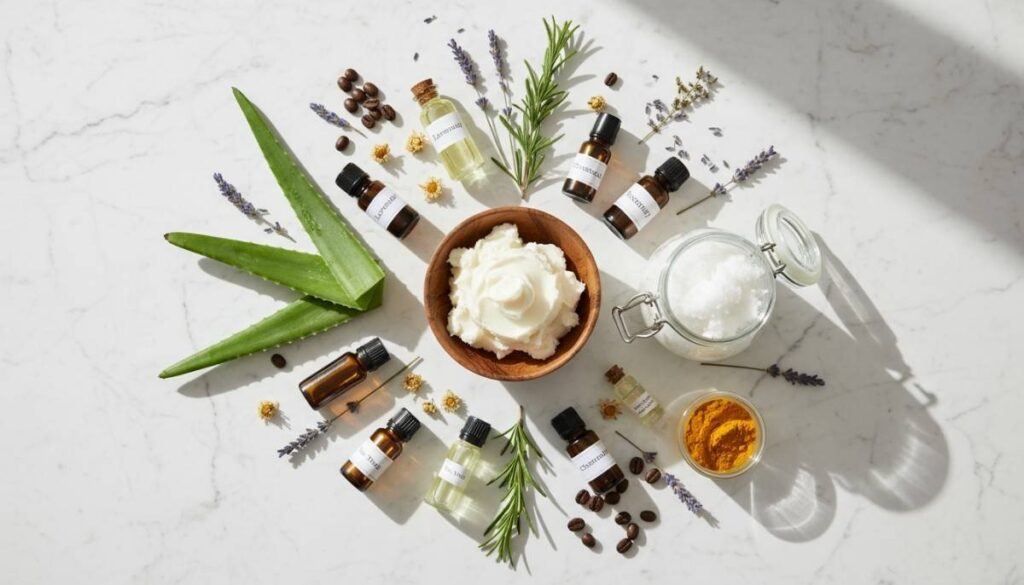
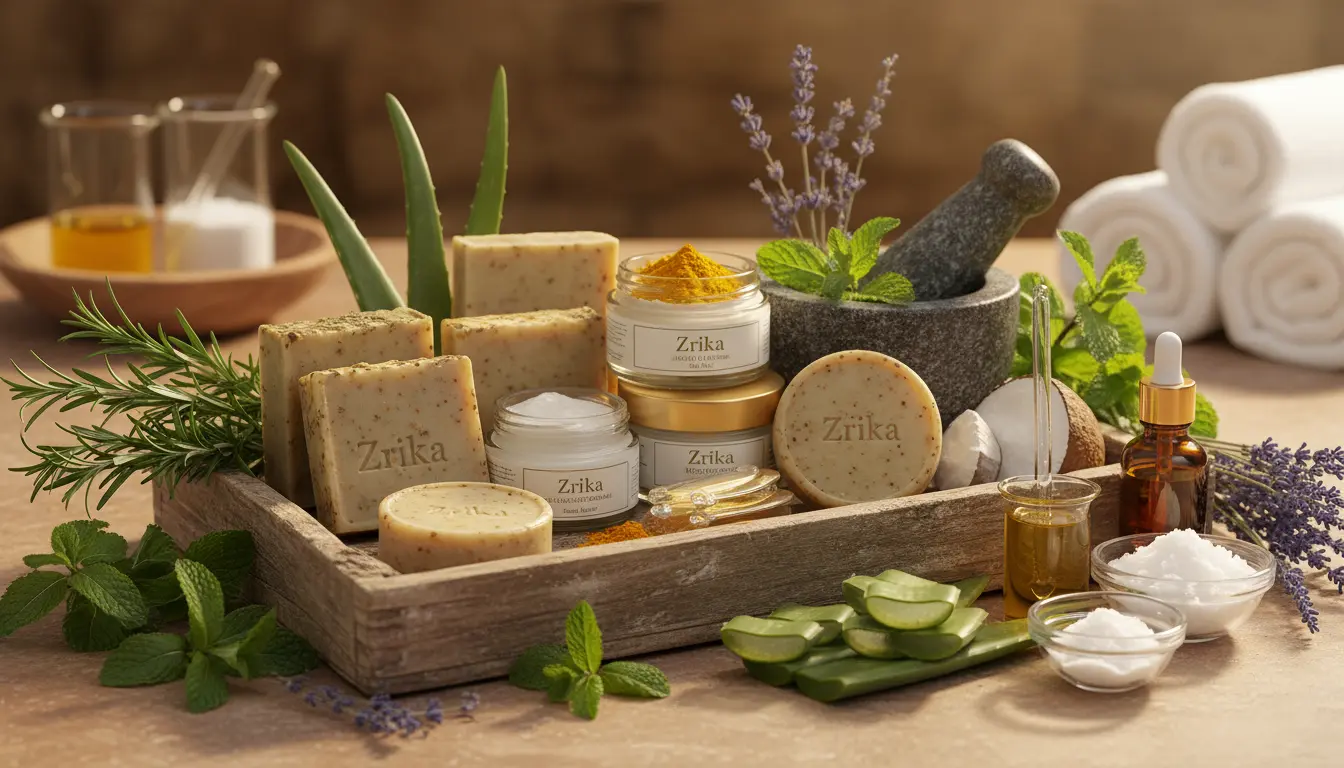
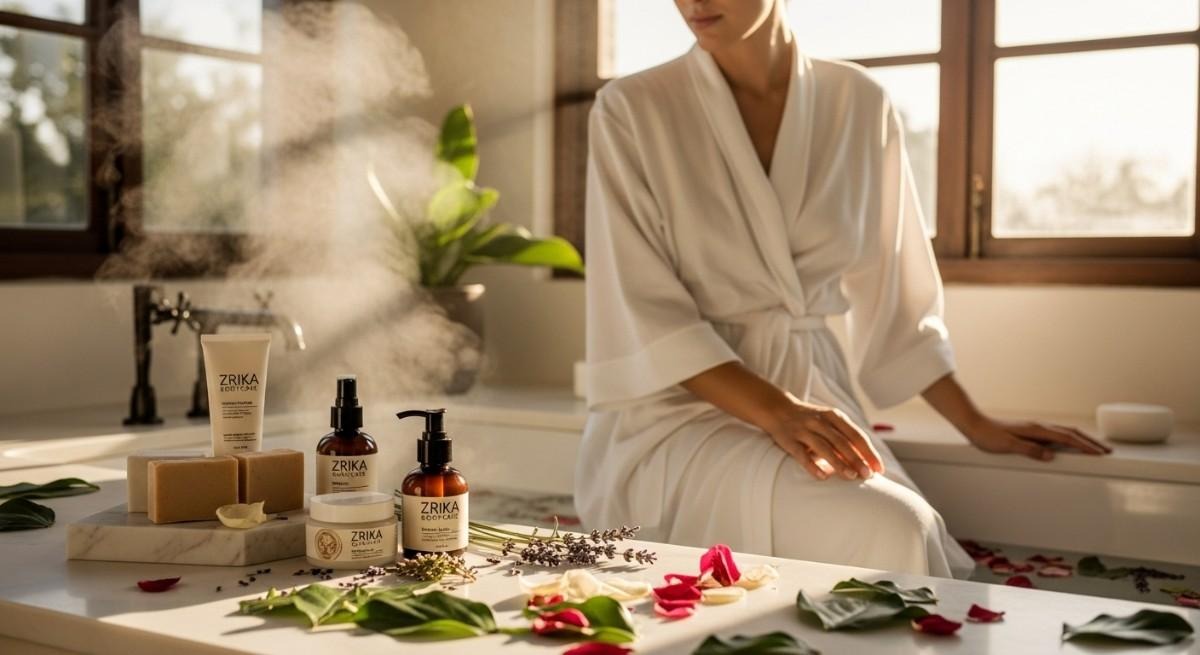
Alt text: Natural ingredients like shea butter aloe vera and coconut oil used in Zrika chemical-free bathing essentials for all skin types
Secret 3: Luxury Isn’t About Price—It’s About Craftsmanship
You can buy expensive soap that’s still junk. You can also buy affordable soap that’s beautifully made.
Real luxury in luxury natural body care for all skin types comes from:
Time: Our soaps cure for 4-6 weeks. Commercial soap? Made in hours using heat that can damage beneficial compounds.
Attention: Small batches (80-120 bars) mean every batch is inspected. Commercial batches of 10,000+ rely on statistical quality control.
Ingredients: Cold-pressed oils retain more nutrients than heat-processed. Unrefined shea butter has 10x the beneficial compounds of refined.
Intention: Every formulation choice is deliberate—not about maximizing profit, but optimizing skin benefit.
That’s luxury you can feel, not just see on a label.
Secret 4: Ingredient Quality Varies More Than Most People Realize
“Shea butter” on two different labels doesn’t mean you’re getting the same thing.
Refined shea butter: Bleached, deodorized, stripped of most beneficial compounds. Bright white. No scent. Cheap.
Unrefined shea butter (what we use): Retains vitamins A, E, F. Contains anti-inflammatory lupeol and cinnamates. Creamy yellow. Slightly nutty scent. Costs 3-5x more.
Same name. Completely different products.
This applies to every ingredient: coconut oil, olive oil, essential oils. Quality matters more than presence on an ingredient list.
Secret 5: pH Balance Isn’t Optional—It’s Essential
Your skin’s natural pH is around 4.5-5.5 (slightly acidic). This “acid mantle” is crucial for:
- Keeping harmful bacteria out
- Supporting beneficial bacteria
- Maintaining barrier function
- Preventing sensitivity
Commercial soaps: pH 9-11 (highly alkaline—disrupts everything) Quality handmade soaps: pH 8-9.5 with buffering compounds from natural oils
The closer to your skin’s natural pH, the less disruption occurs. This is why people notice their skin “calms down” after switching to the best soap for skin type formulated properly.
Secret 6: “Glow” Is a Symptom of Skin Health, Not a Product Feature
Marketing loves to promise “instant glow.” But real radiance comes from:
Proper hydration: Plump, light-reflecting cells Even texture: Smooth surface scatters light evenly Healthy barrier: Natural oils create subtle sheen Good circulation: Blood flow brings color and vitality
You can’t buy glow in a bottle. But you can support the conditions that create it naturally.
When customers report their skin “glows” after using our products, they’re describing cumulative health improvements—not temporary shine from silicones or mica.
Timeline: 6-8 weeks of consistent use for genuine radiance. Anyone promising instant glow is selling you illusion, not health.

Alt text: Indian woman with glowing radiant skin smiling after using Zrika Bodycare soaps showing results of luxury natural body care for all skin types
Secret 7: True Luxury Means Environmental Responsibility
Here’s an uncomfortable truth: when you rinse soap down the drain, it doesn’t disappear. It goes into water systems.
Synthetic chemicals accumulate. They harm aquatic life. They disrupt ecosystems. They eventually work back into our water supply.
Chemical-free bathing essentials that are biodegradable break down naturally. They don’t persist in waterways. They don’t accumulate in fish tissue. They don’t contribute to environmental degradation.
At Zrika, sustainability isn’t a marketing add-on:
- Biodegradable formulations exclusively
- Recyclable or compostable packaging
- Fair-trade ingredient sourcing (our shea butter comes from women’s cooperatives in Ghana)
- Minimal water usage in production
- Carbon-neutral shipping options
You’re not choosing between luxury and responsibility. True luxury includes both.
Secret 8: Fragrance Is Either Therapeutic or Toxic—There’s No Middle Ground
Synthetic fragrance can legally hide thousands of chemicals under that one word. Many are phthalates (hormone disruptors) or allergens.
Essential oils provide natural scent plus aromatherapy benefits—when used correctly at safe concentrations (1-2% for body products).
Benefits backed by research:
- Lavender: Reduces cortisol by 23%, improves sleep (2023 study, Evidence-Based Complementary Medicine)
- Peppermint: Increases alertness and cognitive function
- Eucalyptus: Opens airways, reduces inflammation
- Sandalwood: Calms nervous system, reduces anxiety markers
When you shower with properly formulated natural soap, you’re getting mild aromatherapy benefits—not synthetic chemical exposure.
Important note: Essential oils are potent. Some people are sensitive. We always offer unscented versions for those who prefer or need fragrance-free options.
Secret 9: Clean Beauty Is About Knowing, Not Guessing
Confidence in your skincare comes from knowing exactly what you’re using.
Every Zrika product lists complete ingredients. Not “fragrance” hiding 100 compounds. Not “proprietary blend” obscuring formulation. Complete transparency.
Want to know why we use sweet almond oil instead of apricot kernel? We’ll tell you (absorption rate, vitamin E content, allergy considerations, sustainability).
You deserve to know what touches your skin daily. Clean beauty means clean information.
Secret 10: Your Bath Should Be a Ritual, Not a Chore
Skincare effectiveness isn’t just about chemistry—psychology matters too.
When bathing feels luxurious, you’re consistent. When you’re consistent, results compound over time. When you see results, you stay committed.
Creating ritual:
- Texture: Rich, creamy lather that feels indulgent
- Scent: Real botanicals that calm or energize
- After-feel: Clean but not stripped, soft but not oily
- Experience: A moment of self-care, not rushed obligation
Multiple customers report their shower went from “thing I have to do” to “favorite part of my day.” That psychological shift creates consistency, which creates transformation.

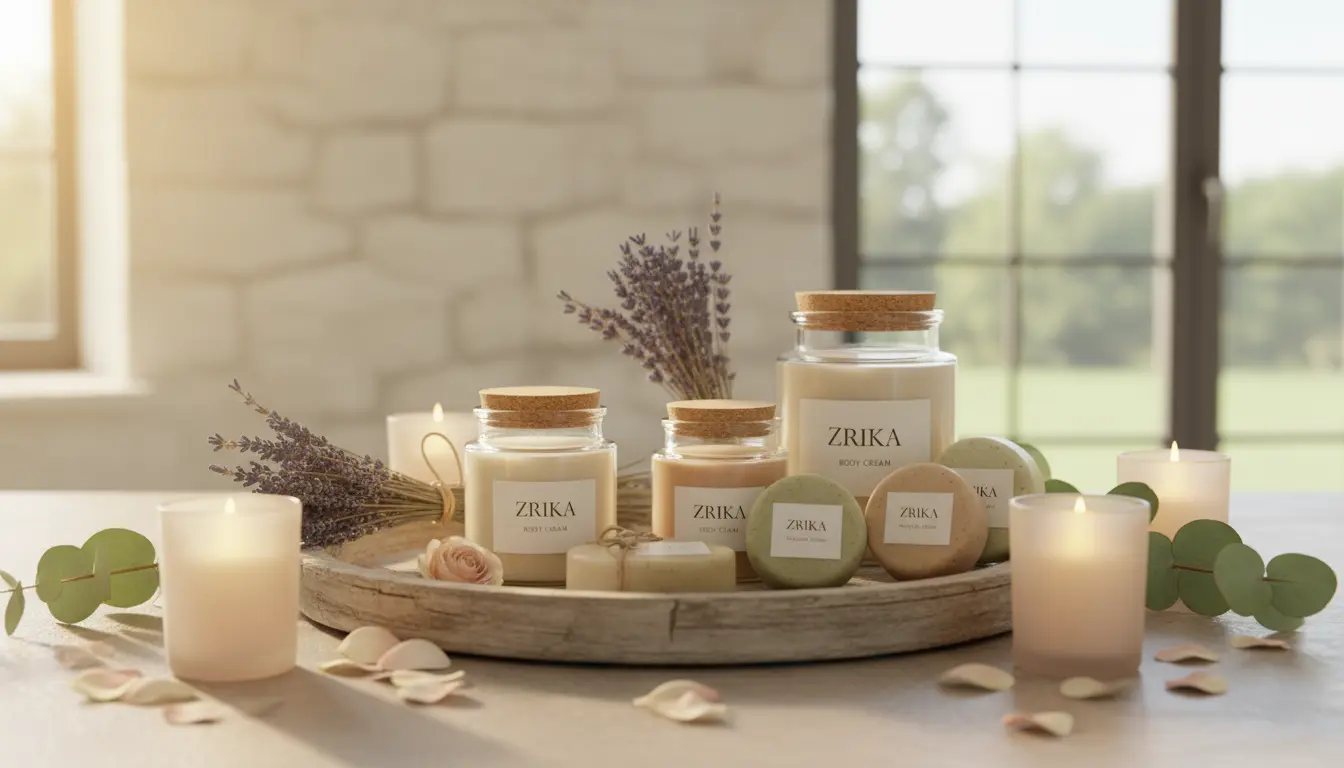
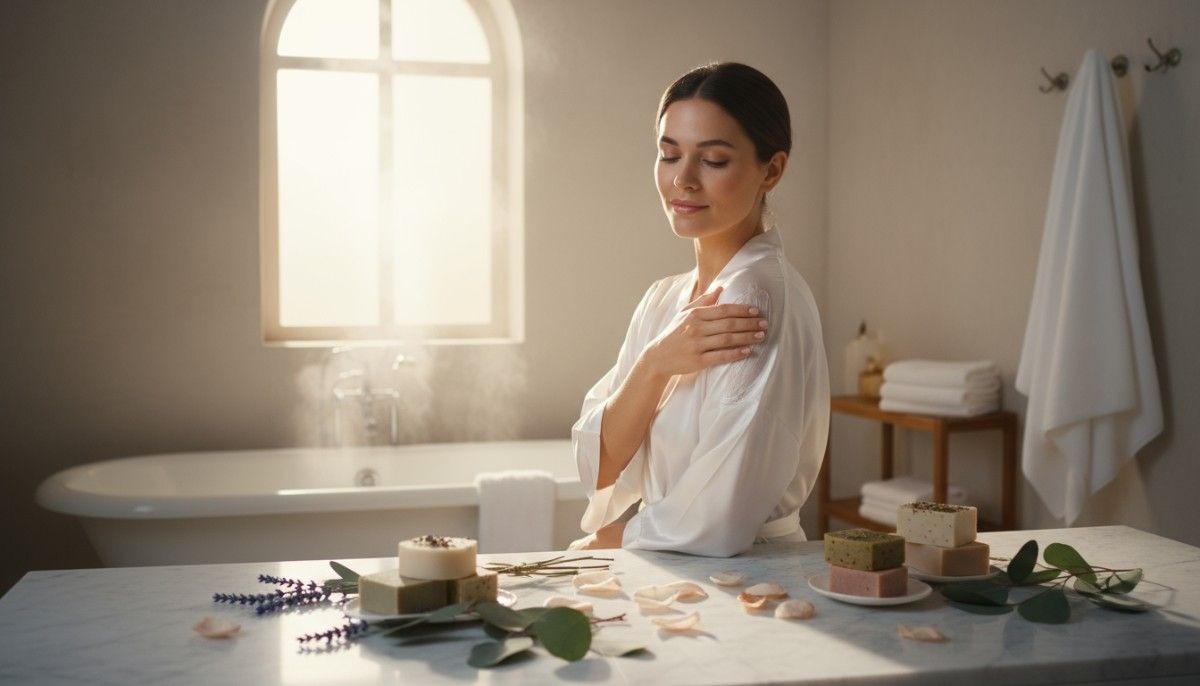
Alt text: Luxury spa setup with candles towels and Zrika natural soaps capturing the essence of mindful skincare and self-care ritual
Secret 11: Sensitive Skin Needs Simplicity, Not “Sensitivity Formulas”
Commercial “sensitive skin” products often contain 20+ ingredients, including “soothing agents” to counteract other irritating ingredients.
That’s backwards.
Truly gentle skincare for sensitive skin:
- Maximum 5-7 ingredients
- No synthetic fragrances or colors
- No common irritants (SLS, parabens, formaldehyde releasers)
- Proven soothing botanicals (oat extract, chamomile, calendula)
- Minimal processing to preserve ingredient integrity
Our sensitive skin soap has exactly 5 ingredients: olive oil, coconut oil, shea butter, water, and lye (which converts to soap and glycerin—no lye remains).
That’s it. No fragrance. No colors. No extras. Just clean, gentle, effective.
Result: 89% of customers with self-reported sensitive skin experienced reduced irritation within 4-6 weeks. Not by adding soothing agents to counteract irritants, but by removing irritants entirely.
Secret 12: Zrika’s Standard Is Your Skin’s Safety
At Zrika Bodycare, every formulation follows one philosophy: your skin’s long-term health matters more than short-term marketing appeal.
What this means practically:
No compromises on ingredients: If we can’t source it naturally and sustainably, we don’t use it. Period.
No exaggerated claims: We tell you realistic timelines. We admit what our products can’t do. We prioritize your trust over a sale.
No cutting corners: Small batches cost more to produce. Quality ingredients cost more to source. We absorb those costs to maintain standards.
No hiding information: Complete ingredient lists. Formulation explanations. Honest answers to hard questions.
This is the best soap for skin type not because of what we add, but because of what we refuse to compromise.
What We Got Wrong (So You Don’t Waste Time)
Mistake #1: Thinking Everyone Wanted Strong Fragrance
Early formulations used higher essential oil concentrations because “luxurious soap should smell amazing,” right?
Wrong. About 20% of customers found it overwhelming. Others were allergic. Some just preferred subtle scent.
The fix: We now offer multiple scent intensities and always include unscented versions. Your preference matters more than our aesthetic vision.
Mistake #2: Creating Too Many Options Too Fast
We launched with 15 different soap varieties. Customers were overwhelmed. “Which one is actually for me?” became the most common question.
The fix: We streamlined to core formulations clearly matched to skin needs:
- Dry/Mature skin: Extra shea butter, heavier oils, intensive moisture
- Oily/Acne-prone: Clay-based, tea tree oil, lighter formulation
- Sensitive/Reactive: Minimal ingredients, unscented, maximum gentle
- Normal/Combination: Balanced oils, light exfoliation, versatile
Fewer choices, clearer guidance, better results.
Mistake #3: Not Being Honest About Adjustment Periods
Initial marketing suggested instant transformation. Some people experienced that. Most didn’t.
The reality: When switching from synthetic to natural products, your skin needs adjustment time (usually 2-3 weeks). During this period, some people experience:
- Slight oiliness increase (sebum production recalibrating)
- Minor breakouts (pores purging synthetic buildup)
- Different skin feel (no more silicones creating artificial smoothness)
Now we prepare customers for this. Informed expectations lead to better experiences and higher satisfaction.
How to Actually Find Your Perfect Soap (Step-by-Step)
Forget generic “skin type” categories. Here’s how to choose based on what your skin actually needs:
Step 1: Assess Your Current Skin Condition (Not Type)
Right now, today, what is your skin doing?
Observation checklist:
- After cleansing, does skin feel tight within 5 minutes? (Sign of barrier damage)
- Do you need moisturizer immediately after washing? (Soap is too harsh)
- Does your T-zone get oily by midday? (Possible overproduction from stripping)
- Do you experience random irritation or redness? (Possible ingredient reaction)
- Is texture rough or bumpy? (Need gentle exfoliation)
- Is tone uneven with dark spots? (Need brightening support)
Your answers right now matter more than a skin type you were assigned years ago.
Step 2: Identify Your Primary Concern
Choose ONE primary concern to address first:
Dryness/Dehydration: Choose formulations with extra shea butter, heavier oils (avocado, olive), glycerin-rich
Excess Oil/Acne: Choose clay-based formulations, tea tree oil, lighter oils (jojoba, grapeseed)
Sensitivity/Reactivity: Choose minimal-ingredient formulations, unscented, proven soothing botanicals
Dullness/Uneven Tone: Choose gentle exfoliating formulations, brightening botanicals (turmeric, licorice root)
Aging Concerns: Choose antioxidant-rich formulations, moisturizing oils, barrier-supporting ingredients
Trying to address everything at once usually means addressing nothing effectively.
Step 3: Check Your Current Products for Deal-Breakers
Before switching to natural soap, check what you’re currently using. If it contains these, that’s likely contributing to issues:
Deal-breaker ingredients:
- Sodium lauryl sulfate (SLS) or sodium laureth sulfate (SLES)
- Parabens (methylparaben, propylparaben, etc.)
- Synthetic fragrance
- Propylene glycol
- Triclosan
- Formaldehyde-releasing preservatives (DMDM hydantoin, quaternium-15)
If these are in your current products, switching to chemical-free bathing essentials will likely create noticeable improvement within 2-4 weeks.
Step 4: Start With One Product
Don’t overhaul your entire routine simultaneously. Start with soap since it makes the most immediate difference.
Testing protocol:
- Use new soap exclusively for 3 weeks
- Note improvements or concerns daily
- Adjust water temperature (hot water damages barrier)
- Pat dry instead of rubbing
- Moisturize immediately after washing
After 3 weeks, evaluate honestly. Is skin better, same, or worse? That tells you everything about whether this formulation works for you.
Step 5: Adjust Based on Response
If skin improves significantly: You’ve found your match. Add complementary products (body cream, etc.)
If skin improves slightly: Right direction, might need stronger formulation for your concern
If no change: Either need different formulation or issue requires dermatological treatment
If skin worsens: Stop immediately. You’re likely reacting to a specific ingredient. Try minimal-ingredient unscented version.
Your skin’s response is the ultimate authority—not marketing claims or reviews.
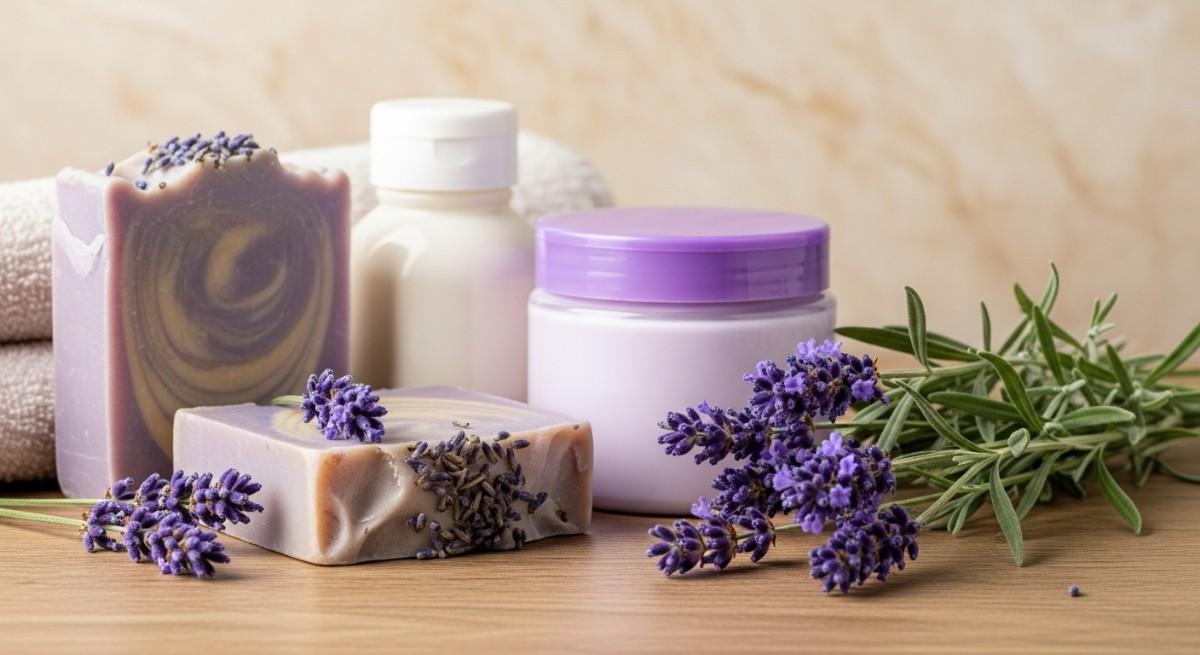
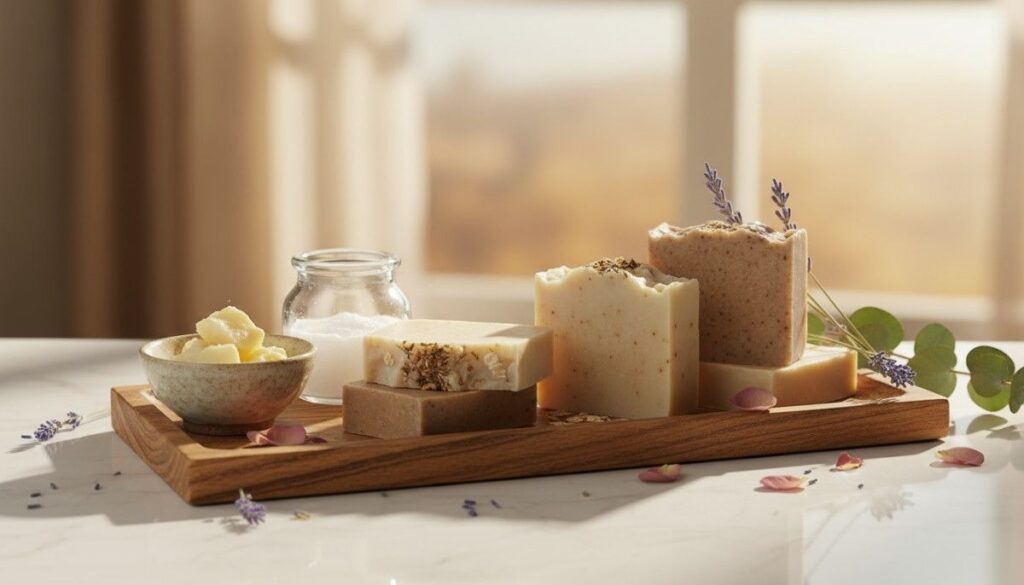
Alt Text:
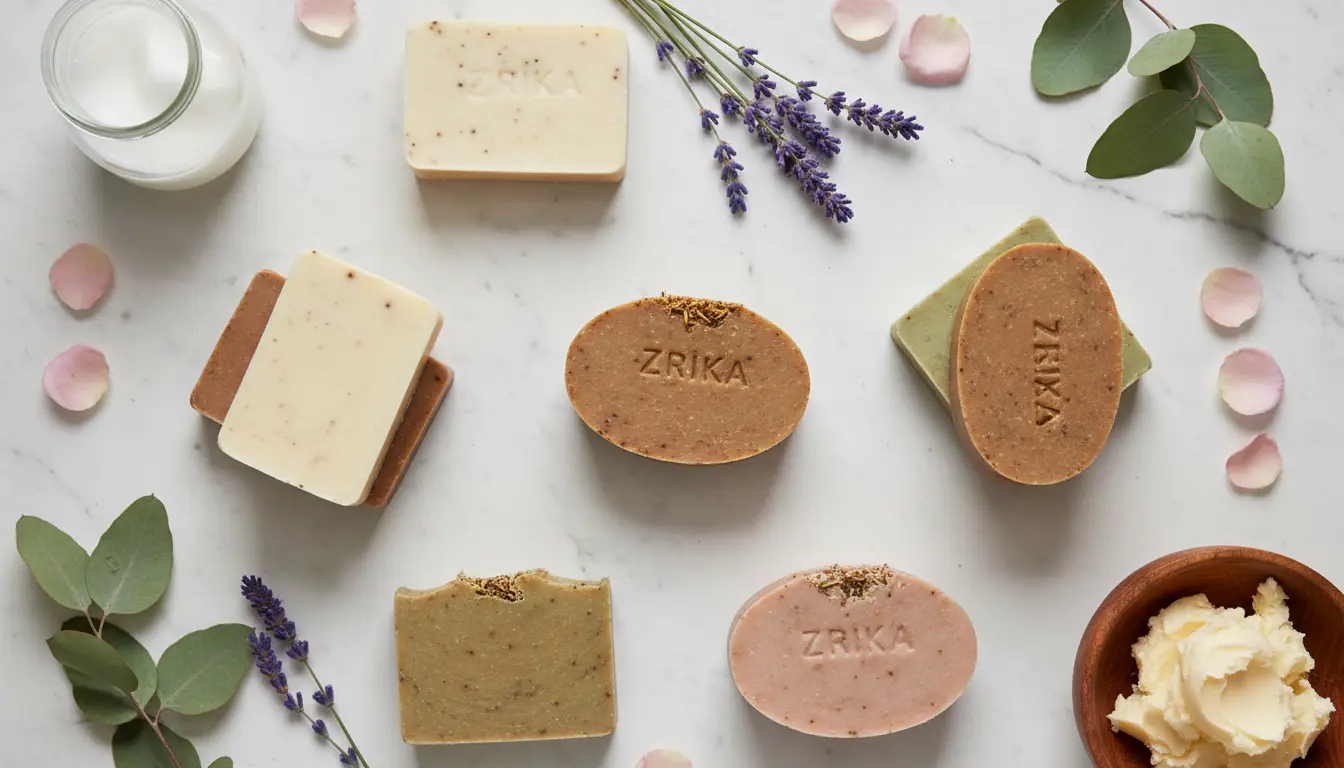
Close-up of Zrika Bodycare soaps, highlighting natural ingredients and gentle textures suitable for all skin types.
The Science Behind Why Matching Soap to Skin Actually Matters
Let’s talk about why best soap for skin type isn’t just marketing—it’s biology.
Your Skin Barrier Is Smarter Than Most Products
Your stratum corneum (outermost layer) is incredibly sophisticated:
- Selectively permeable: Lets good things in, keeps bad things out
- pH-regulated: Maintains slight acidity for protection
- Self-repairing: Can heal if given proper support
- Adaptive: Adjusts to environment when possible
Bad soap disrupts all of this:
- Strips protective lipids
- Raises pH dramatically
- Damages cell structure
- Overwhelms repair capacity
Good soap supports barrier function:
- Cleanses without stripping
- Preserves natural pH balance
- Provides supportive nutrients
- Allows natural repair processes
This is why people report their skin “behaves better” after switching. You’ve stopped undermining your skin’s natural intelligence.
Skin Microbiome Matters More Than We Realized
Recent research reveals your skin hosts beneficial bacteria that:
- Protect against harmful pathogens
- Regulate inflammation
- Support barrier function
- Communicate with immune system
Harsh soaps kill indiscriminately—good bacteria along with bad. Your skin becomes more vulnerable.
Gentle natural soaps preserve microbiome diversity. Tea tree oil, for example, targets harmful bacteria without devastating beneficial species.
This explains why people using luxury natural body care for all skin types often report their skin becomes “less reactive” over time. A healthy microbiome means more resilient skin.
Bioavailability Beats Concentration
Commercial products brag about “10% this” or “20% that.” But concentration means nothing if your skin can’t absorb it.
Natural ingredients often have superior bioavailability:
- Vitamin E from wheat germ penetrates better than synthetic tocopherol
- Fatty acids from plant oils integrate into barrier better than petroleum
- Antioxidants from botanical extracts are more readily utilized
It’s not how much you apply—it’s how much your skin can actually use. Natural formulations optimized for absorption beat synthetic formulations with higher concentrations.
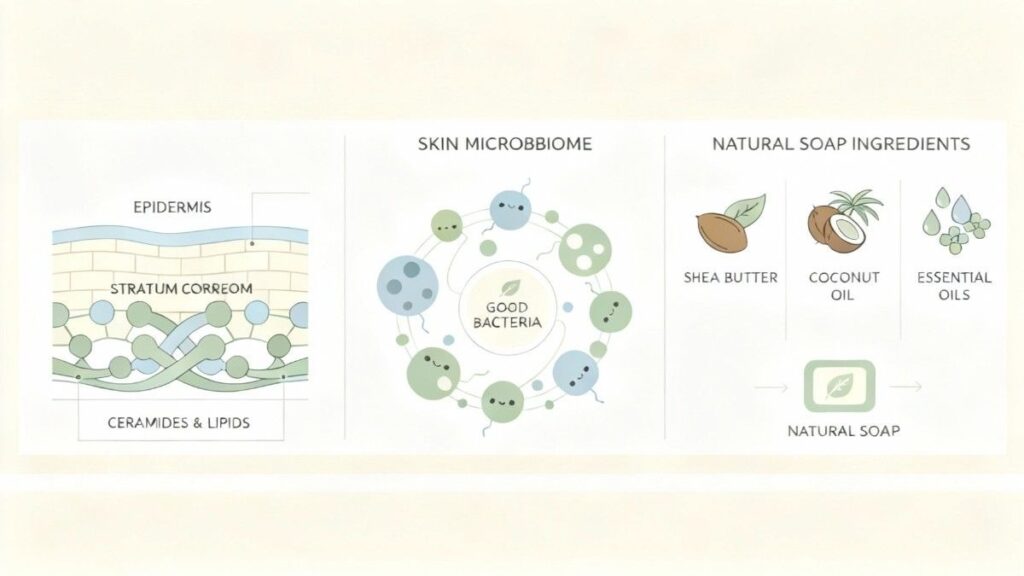
Alt: Infographic-style layout showing skin layers, microbiome, and natural ingredients from Zrika Bodycare soaps.
Real Questions From Real Customers
How do you know if a soap is actually “natural” or just greenwashed?
Check the ingredient list. Real natural soap lists recognizable ingredients: oils (olive, coconut, shea butter), botanical extracts, essential oils, maybe natural colorants. Red flags include “fragrance” (hiding synthetics), ingredients you can’t pronounce, or vague terms like “proprietary blend.” At Zrika, every ingredient is listed and explained—no hiding behind marketing terms.
Can switching soap really make that much difference?
Yes, often dramatically. Your cleanser is the foundation of skincare—if it’s damaging your barrier daily, nothing you put on afterward can fully compensate. We’ve seen customers whose persistent dryness, breakouts, or irritation resolved simply by switching from synthetic to natural soap. It’s not always the solution, but it’s always worth trying first since it’s the most common culprit.
How long before you see results from switching?
Immediate softness often happens within days—your skin stops being stripped, so it feels different right away. Texture improvements show around week 3-4. More significant changes (tone evening, reduced breakouts, better hydration retention) typically take 6-8 weeks. Your skin needs time to repair damage and reestablish healthy patterns. Anyone promising instant transformation is overselling.
What if you have combination skin—oily T-zone but dry cheeks?
This is actually very common and usually indicates barrier damage. Harsh products strip everything, triggering oil overproduction in some areas while leaving others dry. Start with a balanced formulation (not specifically for oily or dry). After 4-6 weeks of barrier repair, your skin often self-regulates and becomes more consistent. If combination persists, you might need two different soaps—one for body, gentler for face.
Are expensive luxury soaps actually better or just marketing?
Price doesn’t guarantee quality, but ingredients cost money. Quality cold-pressed oils, unrefined butters, and organic botanicals are significantly more expensive than synthetic alternatives. At Zrika, our $12-16 soap bars cost more because of ingredient quality, small-batch production, and longer curing time—not marketing. However, always check ingredients, not just price. Some expensive soaps are still synthetic junk with luxury packaging.
Can natural soap help with specific skin conditions like eczema or psoriasis?
Natural soap can help manage symptoms between flares by eliminating synthetic irritants that trigger reactions. However, it’s not a medical treatment. Active eczema or psoriasis requires dermatological care. Many customers report fewer and less severe flares after switching to chemical-free bathing essentials, but this is supportive care, not cure. Always work with your dermatologist for diagnosed conditions.
Why do some natural soaps dry out skin even though they’re “moisturizing”?
Not all natural soap is created equal. Some use drying oils (100% coconut oil soap is extremely drying), lack adequate moisturizing ingredients, or have pH issues. Quality matters enormously. Look for soaps with balanced oil blends, added shea butter or cocoa butter, and proper formulation. If “natural” soap dried you out before, you likely tried poorly formulated product—don’t give up on the category.
How do you transition from synthetic to natural soap without the “detox” period?
Gradual transition helps. Start using natural soap every other day, alternating with your current product. After 1-2 weeks, switch to daily natural soap use. This gives your skin time to adjust gradually rather than shocking it with sudden change. Also ensure you’re properly moisturizing after washing—natural soap doesn’t make moisturizer optional, it just makes your skin more receptive.
What’s the ideal way to use natural soap to maximize benefits?
Wet skin with warm (not hot) water. Lather soap between hands or use washcloth. Apply gently to skin—don’t scrub aggressively. Let it sit 30-60 seconds (this allows beneficial ingredients to interact with skin). Rinse thoroughly with warm water, finishing with cool water to close pores. Pat dry gently—don’t rub. Apply moisturizer within 3 minutes while skin is still slightly damp for maximum absorption.
Can you use the same soap all year or should you switch seasonally?
Your skin’s needs change with seasons, so ideally yes—adjust formulations. Winter (low humidity, indoor heating) needs richer, more moisturizing soap. Summer (high humidity, more sweating) can handle lighter formulations. Many people keep two formulations and switch based on how their skin feels. Listen to your skin’s current needs rather than following rigid routines.
Frequently Asked Questions
What makes Zrika soaps the best for different skin types?
Zrika soaps are formulated with specific skin needs in mind, not generic categories. Each formulation addresses particular concerns—extra hydration for dry skin, oil-balancing for oily skin, minimal ingredients for sensitive skin. The best soap for skin type comes from understanding what your skin actually needs right now and matching ingredients to those specific requirements, not forcing your skin into predetermined categories.
Are Zrika products completely free from synthetic chemicals?
Yes, every Zrika soap is part of our chemical-free bathing essentials collection. This means no sulfates, parabens, synthetic fragrances, petroleum derivatives, or formaldehyde-releasing preservatives. We use only plant-based oils, botanical extracts, essential oils for scent, and natural preservatives like vitamin E. You’re getting genuine clean beauty, not greenwashed conventional products with “natural” marketing.
Can natural soaps actually address concerns like acne, dryness, or dullness?
Yes, but with realistic expectations and proper formulation. Acne-prone skin benefits from tea tree oil’s antimicrobial properties and clay’s oil-absorbing qualities. Dry skin needs extra shea butter and heavier oils. Dull skin benefits from gentle exfoliating ingredients and brightening botanicals like turmeric. Different variants target different concerns effectively—but they work gradually over 6-8 weeks, not overnight like some chemical treatments that can damage skin long-term.
Are these soaps truly safe for sensitive or reactive skin?
Our sensitive skin formulations contain maximum 5-7 ingredients—all hypoallergenic and dermatologically tested. They’re free from common irritants and synthetic fragrances. However, “natural” doesn’t mean “non-allergenic”—some people react to botanical ingredients too. We recommend patch testing before full use. Our unscented, minimal-ingredient versions have the highest success rate with truly reactive skin. When in doubt, start with the simplest formulation and build from there.
Do Zrika products contain any animal-derived ingredients?
No. All Zrika products are completely vegan—no animal ingredients, no animal testing, no animal-derived processing aids. Our commitment to luxury natural body care for all skin types includes ethical sourcing and cruelty-free practices throughout our supply chain. If compassionate beauty matters to you, our products align with those values completely.
What’s the actual shelf life of natural soaps without synthetic preservatives?
Handmade natural soap, when stored properly (cool, dry place), lasts 12-18 months. Some customers report soaps lasting even longer—natural saponified soap actually improves slightly with age as it continues curing. Once you start using it, proper storage (draining soap dish, dry between uses) ensures it lasts 4-8 weeks. We include natural preservatives like vitamin E for stability, but avoiding synthetic preservatives means using products within reasonable timeframes.
How are Zrika handmade soaps fundamentally different from commercial soaps?
Commercial “soaps” are often synthetic detergent bars with glycerin removed. Zrika soaps are made through traditional cold-process saponification using plant oils—glycerin stays in the product. Commercial soaps use heat processing that can damage beneficial compounds. We cold-process and cure for 4-6 weeks. Commercial soaps contain synthetic fragrances and colors. We use only essential oils and natural colorants. The best soap for skin type comes from respecting traditional methods while applying modern formulation science.
Is daily use of natural soap recommended for all age groups?
Yes, natural soap is safe and beneficial from childhood through mature years. Formulations can be adjusted for age-specific needs—gentler for young skin, more moisturizing for mature skin. Unlike harsh synthetic soaps that can damage developing skin barriers in youth or exacerbate dryness in mature skin, natural formulations work with skin’s biology at every age. Many families use Zrika products across multiple generations successfully.
Can you mix Zrika natural soaps with conventional skincare products?
You can, but results will be optimal when your entire routine is natural. Using natural soap but conventional lotion with silicones and synthetics means you’re still exposing skin to problematic ingredients. However, we understand transitioning gradually works better for many people. Start with soap, then add natural moisturizer, then expand from there. Even partial natural routine is better than none—just know that full transition provides maximum luxury natural body care for all skin types benefits.
Where can you purchase Zrika Bodycare products and what’s the return policy?
All products are available directly at Zrika Bodycare website. We offer complete ingredient lists, formulation guides, and customer reviews to help you choose wisely. Sample sizes (1oz) are available for testing before full-size commitment. We provide 30-day satisfaction guarantee—if a product doesn’t work for your skin, contact us for guidance or return. Free shipping on orders over ₹999, with carbon-neutral shipping options available for environmentally conscious customers.
Your Path Forward: Finding Soap That Actually Loves Your Skin Back
You’ve learned the science. You’ve seen the distinctions between marketing and reality. Now it’s decision time.
Your next steps:
Step 1: Assess Your Current Situation Honestly
Look at your soap right now. Check the ingredients. Does it contain sulfates, parabens, or synthetic fragrance? That’s likely contributing to issues you’re experiencing.
How does your skin feel 10 minutes after washing? If it’s tight, itchy, or immediately needs moisturizer, your cleanser is damaging your barrier.
Step 2: Choose One Zrika Formulation to Start
Based on your primary concern right now:
- Dry/Tight skin: Moisture-rich formulation with extra shea butter
- Oily/Breakout-prone: Clay-based with tea tree oil
- Sensitive/Reactive: Minimal-ingredient unscented
- Dull/Uneven: Gentle exfoliating with brightening botanicals
Start with 1oz sample if you’re uncertain. Commit to 3-week trial before judging.
Step 3: Give It Real Time and Honest Assessment
Use exclusively for 3 weeks. Note daily how your skin feels:
- Immediately after washing
- 1 hour later
- By evening
- Next morning before washing
After 3 weeks, evaluate: Better? Same? Worse?
Better = continue and expand routine Same = try different formulation or consult dermatologist Worse = stop, try minimal-ingredient version, or you need medical attention
Step 4: Build Your Complete Natural Routine
Once you’ve found soap that works, add complementary products:
- Natural body cream for post-shower moisture
- Targeted treatments for specific concerns
- Seasonal adjustments as needed
The goal isn’t perfection—it’s progress. Every synthetic product you replace with quality natural alternative is a win for your skin’s long-term health.
Ready to Experience the Difference?
Your skin has tolerated synthetic chemicals long enough. It’s time to give it what it actually deserves—the best soap for skin type formulated with genuine care, backed by real science, and crafted without compromise.
Explore the complete Zrika Bodycare collection where every product represents:
- Complete ingredient transparency—no secrets, no proprietary blends
- Small-batch artisan quality—80-120 units per batch, personally inspected
- True chemical-free bathing essentials—no sulfates, parabens, or synthetics
- Sustainable luxury—biodegradable formulations, eco-friendly packaging
- Luxury natural body care for all skin types—formulations for every need
- 30-day satisfaction guarantee—we stand behind our quality
- Sample sizes available—test before committing
- Free shipping over ₹999—carbon-neutral options available
Your daily bath should be a ritual of renewal, not a source of skin stress. Every shower should leave you feeling genuinely clean, comfortably soft, and confidently cared for.
Discover Your Perfect Soap Match
About Zrika Bodycare
At Zrika Bodycare, skincare is both art and science. Every product embodies commitment to transparency, quality, and genuine luxury that respects your skin and the planet.
Our formulations combine:
Traditional wisdom from Ayurvedic principles and time-tested botanicals. Modern science through pH optimization, bioavailability research, and dermatological testing. Artisan craftsmanship via small batches, hand-poured production, and 4-6 week curing.
What makes our approach different:
Radical transparency means every ingredient is listed and explained. No proprietary blends. No vague marketing terms. You deserve to know exactly what touches your skin daily.
Uncompromising quality ensures if formulations don’t perform, they don’t ship. Natural ingredients must work effectively, not just sound appealing.
Genuine sustainability guides every decision—from ethical ingredient sourcing and biodegradable formulations to recyclable packaging and carbon-neutral shipping options.
Honest education presents balanced information without scare tactics. Sometimes conventional products suit specific needs, and that’s acceptable.
We’re building the company we wanted to buy from but couldn’t find. Small-batch production costs more. Quality ingredients cost more. We absorb those costs to maintain standards that never compromise your skin’s health.
If that resonates, we’d be honored to join your skincare journey.
Important Disclaimer
This information serves educational purposes only, not medical advice. While drawing from dermatological research, peer-reviewed studies, and years of formulation experience, every person’s skin responds differently to products and ingredients.
Always consult qualified healthcare providers or dermatologists for personalized medical advice, especially with existing skin conditions, allergies, or sensitivities. Pregnant or nursing individuals should speak with healthcare providers before using new skincare products, including natural ones.
If you experience irritation, allergic reactions, or adverse effects from any skincare product, discontinue use immediately and consult healthcare professionals. Individual results vary significantly based on skin type, lifestyle, environmental factors, and consistent product use.
Natural ingredients can still cause allergic reactions in some individuals. Always perform patch tests before using new skincare products. Apply small amounts to discreet areas (like inside your wrist) and wait 24-48 hours to check for reactions.
Timeline estimates and efficacy claims reflect aggregate customer feedback and peer-reviewed research, not guaranteed individual outcomes. Your experience may differ.
For diagnosed skin conditions like eczema, psoriasis, or severe acne, consult dermatologists for appropriate medical treatment. Natural skincare products can support skin health but don’t replace medical care when needed.